

By Katie Patrick
Eleven years ago, when I worked at Catholic Social Services of Southern Nebraska (CSS) as a refugee case manager, I welcomed a family from Sudan. Like many of our clients, they fled terrible circumstances in their home country, including conflict, persecution and the risk of famine. Yet they also had heavy hearts, having left behind family, friends and all that was familiar.
Moving to Lincoln and starting over wasn’t easy, but they worked hard at learning a new language and finding jobs. I recall setting up their apartment, and showing them how to use the stove, microwave, washer and dryer. After submitting a handful of employment applications, I remember our shared excitement when the Dad received his first job at Amigos. It was the night shift, but he was so proud to bring home a paycheck to support his wife and their 1-year-old son.
As the weeks went by, I helped them draft a household budget, explaining upcoming bills they would have to pay, such as rent and utilities, as well as the importance of setting aside money for unexpected emergencies. Amidst the documentation and health appointments, we got to know each other quite well. I drove them around Lincoln, pointing out the university and football stadium as I often did with new families. We even squeezed in time for a guided tour at the State Capitol building.
Standing in the rotunda, I could only imagine the profound impact it had on them. For me, a recent graduate of diplomacy and international relations, it was a beautiful building, a symbol of American democracy. But for them, it likely represented something far more profound: a tangible expression of ideals – justice, equality, and freedom – they had only ever dreamed about, that is until they arrived in the United States. That was a fun afternoon! As the months went by and they became self-sufficient—a shared goal of all our refugee families—I saw them less and less, as my focus shifted to new families and their needs.
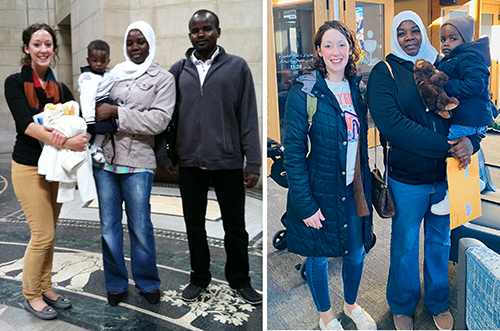
Years passed, and the memory of our time together faded somewhat. To my surprise, as I walked through our crowded front lobby on the day of our Christmas food basket giveaway, I heard my name called. It was the mother. She reminded me who she was and we immediately embraced. We were so happy to reconnect!
We shared family updates, and I learned that her husband is now in the trucking business. She is continuing her education in healthcare at SCC, and they have three children. She and her husband have both become U.S. citizens after passing the naturalization test. I was sure to inquire about how she prepared for the exam, having once been a citizenship instructor myself.
I told her about my three young daughters and that I’m back at CSS as the director, reminding her, of course, that some of my happiest moments at CSS were with her and her family. She had tears in her eyes when she thanked me for all that CSS had done for her, emphasizing to me that it was our kindness and genuine warmth at their arrival to Lincoln, and that for people in situations similar to hers that’s what matters most of all.
I think sometimes that people in these situations – namely, refugees – are so eager to achieve safety and security that we forget the human emotions that follow us. The excitement of a new place, a safe place and a peaceful place can be swiftly replaced by feelings of loneliness, frustration, and despair. Loneliness comes into play when learning a new language, especially for parents who are busy providing for their children and meeting basic needs such as food, shelter, and transportation.
I’ve seen fathers and mothers frustrated at not being able to practice their professions in the U.S., and helpless at how to integrate cultural traditions from their homeland into their bustling new lives. This makes it all the more necessary to be surrounded by people, different though they may be with their language, customs, and culture, who can embrace them, welcome them, and guide them as they build a new life here in the Good Life.
