

By Andrew Winter
1. Charles Borromeo, whose feast day we celebrate Nov. 4, was born in 1538, just after the outbreak of the Protestant Revolt, into a very rich family. His relatives held very powerful positions in the Church, and thanks to his uncle, who became Pope Pius IV, he attained the rank of cardinal at age 22. He was not even a priest at the time.
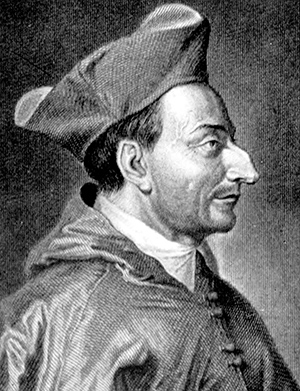
2. Pius IV made him administrator of Milan, a see which had had no bishop for 80 years. But Pius weighed him down with so many other offices that he was not allowed to visit Milan for some time. “Butler’s Lives of the Saints” tells us that Pius made him: “Legate of Bologna, Romagna and the March of Ancona, and protector of Portugal, the Low Countries, the Catholic cantons of Switzerland, and the orders of St Francis, the Carmelites, the Knights of Malta, and others.”
3. Even with all these duties, Charles reserved sufficient time and energy to keep the Council of Trent running in its third and final session. He persuaded Pius IV to reconvene the council, and in the face of opposition and infighting, persuaded the bishops to finish their work. He also helped write the Catechism of the Council of Trent, as well as its editions of the missal and breviary.
4. Charles also founded an institute for clerical scholarship at the Vatican, and founded CCD (the Confraternity of Christian Doctrine) to educate the youth, especially in his diocese of Milan.
5. Finally, Pius IV ordained Charles the official bishop of Milan, and allowed him to visit his see, but he was soon recalled to his uncle’s deathbed. After the election of Pius V, the new pope let Charles return to Milan for good.
6. While Bishop of Milan, Charles convened six provincial councils, as well as 11 smaller councils within his own diocese. It was his great mission to reform his diocese, and he eventually succeeded in making Milan a model diocese for the Catholic Church at large.
7. Charles angered many because of his reforms, and several assassination attempts were made against him. One priest from a religious order he had chastised shot him in the back while he was at evening prayer in his own home. Charles’ clothing saved him, and he escaped with merely a bruise.
8. Charles was unstoppably generous with his personal money and time. During a famine in Milan, Charles fed 3,000 people for three months, drawing on the great wealth of his family heritage. Later, when a severe plague struck Milan from 1580-82, Charles mustered all the clergy he could and spent his days personally ministering to the sick and dying. He exhausted all that remained of his wealth feeding the city.
9. Charles Borromeo did not die of that plague in Milan, but of a fever in 1584. His canonization process took less than 30 years, and he was elevated to the altars by Paul V in 1610. He is the patron saint of catechists and their students.
