

By Andrew Winter
1. The story of the early Roman heroines Perpetua and Felicity is recorded in the Passio Sanctarum Perpetuae et Felicitatis, a Latin document from A.D. 203, written in part by Perpetua herself. It tells the story not just of the two women, but also of several others martyred alongside them.
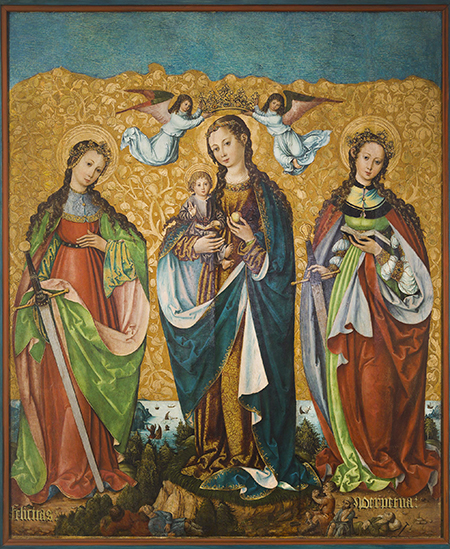
2. Perpetua, Felicity, and their companions died in Carthage at the very beginning of the third century, during the persecution of Septimus Severus. They were scourged and mauled by wild animals while the bloodthirsty Roman citizenry looked on.
3. Perpetua was an educated noblewoman and young mother, 22 years old. Felicity was her slave. They were both imprisoned under horrible conditions for being Christians. Felicity was eight months pregnant at the time of their arrest.
4. While in prison, Perpetua had a vision of a bronze ladder reaching up to heaven, covered in painful weapons and guarded at its base by a dragon. She stepped on the dragon’s head as she began the ascent to heaven, and endured the pain of the weapons until she reached the beautiful garden at the top. Perpetua also had a vision of herself wrestling an Egyptian and winning a crown. From these visions Perpetua understood that she would be wrestling with the devil himself in the Roman arena, and would gain heaven if she persevered.
5. The Passio gives very strong evidence that the third century Christians believed in Purgatory. Perpetua had a third vision, of her brother, who died at age 7. He appeared wounded and ragged, and though he stood by a basin of pure water, he was not tall enough to reach the lip of the basin and drink. Perpetua wrote: “And I made prayer for him day and night.” God answered her prayers, for soon after she saw him again, this time clean and healthy, and the basin was lowered so he could drink to his heart’s content. Perpetua said: “Then I understood that he was freed from his pain.” Her brother was already dead, but obviously his soul suffered pain for a time before attaining perfect happiness.
6. Felicity worried that she would not be martyred with her friends, because Roman law forbade the execution of a pregnant woman. But three days before the execution, she gave birth to a daughter, who was raised by a good Christian friend. As Felicity was in labor, one of the guards taunted her, saying that if she was in pain now, she should think of the beasts in the arena. Felicity responded: “In this way I suffer what I suffer, but then, Another will be in me Who will suffer for me, because I will have suffered for Him.”
7. The martyrs were given a trial and commanded to sacrifice to pagan gods, but they refused. Perpetua’s father, a pagan, came forward and urged her to give in and abandon Christianity, telling her to think of her infant son, and of himself. But she refused.
8. Perpetua and Felicity were attacked by a mad cow in the sight of all Carthage, but they bore the pain peacefully, knowing their reward was coming soon. Their companion Saturus, when he was close to death, took a ring from the finger of one of the guards and dipped it in his own wound. He gave it to the soldier, urging him to keep it as a relic. Finally, they were all killed with swords, and Perpetua guided the shaking hand of the executioner with her own hand.
9. In 1907, a French priest uncovered their grave in Carthage, and found an inscription, which read: “Here are the martyrs Saturus, Saturninus, Revocatus, Secundulus, Felicity, and Perpetua, who suffered on the nones of March.” Their feast day is celebrated March 7.
