

By Bob Sullivan
I decided to reach out to Deacon Omar Gutiérrez (bio below) for a series on Catholic participation in public life because of his knowledge of Catholic social doctrine, and because I have found his insight very helpful in understanding the Catholic approach to various aspects of living in the post-Christian American society.
As we see major U.S. cities wrangling with violent protests and riots, we hear calls for de-funding police forces, and we are living in a nation in panic over a new virus, we also have an upcoming election which most people recognize as extremely important.
In the midst of all of this, what can the average Catholic do? Well, we must turn to the sacraments, dive into prayer, pull our family members and loved ones very close, and make the most informed decisions we can possibly make in all aspects of our life.
An essential ingredient in all good decisions (secondary to grace) is a well-formed conscience. The teachings and traditions of the Catholic faith are irreplaceable in informing the conscience. This is even more important because all of the issues we are dealing with today are already addressed and explained by the Church. Therefore, we do not need to make things up as we go. We can turn to the Church and learn from 2,000 years of Christian teaching and tradition.
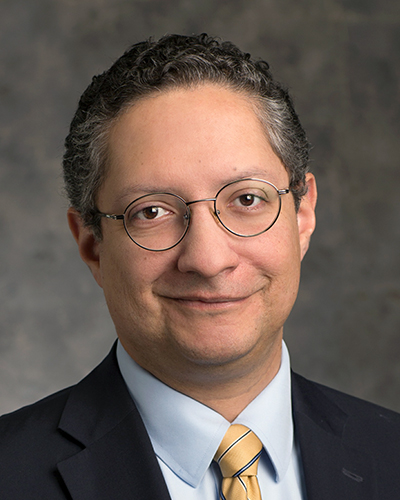 With this brief explanation as the basis for this series, let’s get started with my questions for Deacon Gutiérrez.
Deacon Omar F. A. Gutiérrez is the president and co-founder of the Evangelium Institute, which works with Catholic school teachers and provides adult faith formation opportunities in the Archdiocese of Omaha.
He also works as the director of the Propagation of the Faith for the Archdiocese and is a deacon at St. Peter Parish in Omaha. His theological background focuses mostly on Catholic Social Teaching and he has several books on the subject and a podcast which is available through DiscerningHearts.com.
He also writes for a variety of Catholic publications, including a regular column, “Charity in Truth,” for The Catholic Voice, the paper for the Archdiocese of Omaha.
In Layman’s Terms (ILT): Before we enter into this discussion, I wanted to address the American principle of “separation of Church and State.” This series will be focused on our participation in the public and political realms of society. What would you say to a Catholic who believes this is a violation of the principle of “separation of Church and State”? In other words, as you will certainly point out, the Church teaches that Catholics should be talking about these things. You provide papal documents as well as the USCCB’s document: Forming Consciences for Faithful Citizenship, as irrefutable support of this. Is there any Church document which says that Catholic parishes or organizations should not be teaching and publishing guidance on political matters? Is there anything “uncatholic” about publishing things like this in diocesan newspapers, Catholic radio stations, or even delivering homilies which touch on political matters? I ask, because there are more than a few people who criticize priests and Catholic media for engaging in discussions like this. To me, it seems like critics are trying to gain an unfair advantage when they claim that we should not have public discussions like this.
Deacon Gutiérrez (DG): That’s a fair question. I’m sure many readers know that there is something called the Johnson Amendment of 1954 which bars non-profit 501c3 organizations from participating in partisan activity. The Church is not allowed, then, to promote or condemn political parties or individual candidates. However, the law does allow us to address public policy issues. So, just as a matter of law, we violate nothing by just talking about politics.
There is the very real difficulty, though, that if there were one party that wanted to, say, round up guys named Omar for extermination, and the Church came out and said that a Catholic may not vote in favor of rounding up guys named Omar, everyone would know that the Church was talking about that one political party. So, again, that’s not a violation of the law, but the Church is still accused of partisanship simply for sticking up for human dignity and life.
The truth is that the Church has a long history of being involved in politics. For instance, the Catholic Church of Germany barred Catholics from becoming members of the Nazi Party. In the U.S., Archbishop Joseph Rummel (formerly Bishop of Omaha) excommunicated three Catholics for supporting segregation, which was a hot political topic in the New Orleans of 1962. The Church has a moral obligation to stand up for human rights, even if it ruffles feathers. So, no, there is nothing “uncatholic” about addressing these matters. It would be “uncatholic,” in fact, to stay silent.
I might add that, in my experience, the very folks who want the Church to be quiet about one issue suddenly demand the Church be vocal about other issues. Therefore, my rule is quite simple. I don’t care if what I teach helps or hurts your favorite candidate or political party. I am not registered with any party. My one and only concern is the Church’s teaching.
ILT: Because of the introduction of this series, that is all we have space for this week. In the next column, we will begin with our responsibility to participate in and have an impact on society. In the meantime, being informed not only means knowing how to consider the issues, it means knowing what the candidate says (or fails to say) about each issue. Therefore, I encourage readers to learn more about candidates and issues by reading various reputable resources and by going to the party or campaign website itself to make sure the opinions you read are based in fact.
