By Andrew Winter
1.
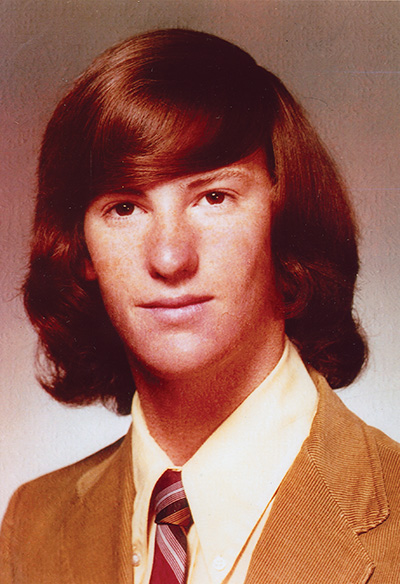
Bishop James Conley was the son of a Baptist father and Presbyterian mother, but his family did not participate regularly in either denomination. During his public-school education, the young Conley became agnostic.
2.
His conversion to Catholicism was the result of the Pearson Integrated Humanities Program at the University of Kansas (KU). This program, founded by professors Franklyn Nelick, Dennis Quinn and John Senior, was a Great Books program at KU for freshman and sophomores. The professors wished to show the intellectual and artistic traditions of Western thought to students who had likely not read a ‘Great Book’ before. The program survived only 10 years before it was overwhelmed by both institutional and public criticism, but in its duration an estimated 200 students in the course converted to Catholicism, and some of its former students went on to found the Benedictine Abbey of Clear Creek in Oklahoma.
3.
Bishop Conley and his roommate Paul Coakley (now Archbishop of Oklahoma City and president of the United States Conference of Catholic Bishops), enrolled in the Integrated Humanities Program, hoping to satisfy some of their general education requirements. The program introduced Conley to truth and beauty in ways he had never experienced. The class began by studying the pagan greats of Greece and Rome, and the second year, moved on to the English literary tradition. Conley had never read any of these historic authors, and found they were all pointing to the same Truth. Enchanted by the transcendent beauty of literature, dance, architecture, music and visual art, Conley found himself getting closer and closer to Catholicism.
4.
During his studies, Conley fell in love with the works of St. John Henry Newman – beatified in 2010 and canonized in 2019 – who had himself converted to Catholicism in 1845. Newman wrote: “To be deep in history is to cease to be Protestant.” After two years steeped in history, Conley realized he needed to follow Newman’s example. Conley would later use Newman’s episcopal motto as his own: Cor ad cor loquitur, “Heart speaks to heart.”
5.
Conley joined the Catholic Church during the fall of his junior year in 1975, and one of the program’s professors, John Senior, was his godfather. When Conley went home for Christmas, he broke the news to his parents, who were skeptical but not hostile. Bishop Conley has often related that he didn’t share the news well, describing it as something like: “By the way, I became Catholic. Please pass the potatoes.”
6.
Conley’s faith as a new Catholic was formed by trips to France and Ireland with the Integrated Humanities Program. While on the island of Inishbofin, County Galway, Ireland, two of Conley’s classmates drowned in the Atlantic. The Irish parish priest ministered to the students grieving during the tragedy and this was the first time Conley felt the pastoral love of a priest. Later, at the French monastery of Fontgombault, Conley said he learned how to pray and seek God in silence.
7.
In 1979, Conley went to see St. John Paul II speak in Des Moines and heard the call to the priesthood. John Paul encouraged the young men in the audience to join seminary, and Conley felt as though the pope was speaking directly to him.
8.
As the thought of priesthood grew in his mind, Conley’s girlfriend at the time wisely set up a meeting for him with a priest spiritual director. On the priest’s advice, he joined seminary in 1980, and studied at Mount St. Mary’s in Maryland. He was ordained a priest in 1985 for the Diocese of Wichita. Kan. He was consecrated a bishop in 2008, and appointed Bishop of Lincoln in 2012.
9.
As a priest, Conley had the privilege of baptizing his own parents and welcoming them into the Catholic Church.
