Recently, at the end of a warm afternoon, while walking through our parking lot, I encountered a middle-aged, homeless man who reminded me of Charlton Heston in his role as Moses in the 1956 film The Ten Commandments (only much thinner—my hunch is that this is the case because of a lack of four squares each day). His long gray beard was most notable, as was an absence of a full set of teeth.
Christians are all over the board on how to handle situations where a family member, friend or acquaintance believes something which contradicts the Catholic faith.
One extreme is to constantly correct them. This turns people off. The other extreme is to ignore their misunderstanding as we spend our time talking around the truth. In other words, we let them persist in their misunderstanding. After all, who wants to be a thorn in someone’s side? Yet Scripture tells us we cannot simply let everything go.
Ireland experienced a watershed moment in its nation’s history and identity May 25. With a voter turnout of 64%, two out of three voters (66.4%) cast a ballot to repeal a provision in the Irish Constitution protecting the right to life of the unborn child.
By doing so, the Irish people have made a fundamental and decisive choice for the “culture of death,” which we, as Americans, know is a culture which permeates and poisons every aspect of human existence—it is a hole from which God alone can rescue us.
I am happy to announce that on Sunday, June 24, Catholic Social Services of Southern Nebraska is having our fifth annual St. Francis Summer’s Eve Celebration. It will be on the Spirit of Brownville Riverboat (on East Main Street, Brownville) once again from 5 to 7 p.m.
[Editor's Note: due to inclement weather, Summer’s Eve Celebration has been rescheduled to Sun. July 22.]
In recent years, attempts at advancing religious liberty legislation, including in Nebraska, have faced fierce opposition, especially from LGBT (Lesbian, Gay, Bisexual, and Transgender) organizations. These efforts to protect our “first, most cherished liberty” have garnered mixed results of successes and defeats.
Seedlings readers may remember the story of a little girl staying with her mother at St. Gianna’s who, after being taken into the chapel for a visit and told that Jesus was in the gold tabernacle, wanted one day to say hello and sing a little song to Jesus as she and her mother walked by the chapel door.
We all deal with people who tell us that we need to tolerate things which are contrary to our faith. Yet these same people often show no interest in tolerating our decision to practice our faith consistently.
Whether we substitute other words for tolerance, such as equality, inclusiveness, welcoming, affirming, accompanying, etc…, the expectation is always the same: As Catholics we are expected to change our beliefs and behaviors, but the broader culture is not expected to tolerate, much less accept, the moral teachings of the Catholic Church. There is a reason for this and I’ll get to it shortly, but first, let’s look at the definition of tolerance.
This week’s column will continue discussing legislation the Nebraska Catholic Conference actively lobbied, but which were not discussed in this column during the legislative session.
Last week, this column discussed LB726, which would have mandated insurance companies to provide coverage for in vitro fertilization procedures under certain circumstances. The NCC opposed this legislation as an attack on marriage, family, and life.
Another legislative bill that undermined marriage and family was LB785, which would have removed husband and wife terminology from the marriage solemnization requirements.
Every Monday morning, the staff at our main office divide and conquer. We divide the cleaning duties and conquer the dirt and grime in the building. This saves hiring a cleaning service so more money can be given away in both emergency services and grants for counseling for those who are unable to afford the total cost of psychological services for some reason.
Before jumping into this week’s article, a brief reminder that Primary Election Day is Tuesday, May 15. Last week’s column encouraged everybody to read Forming Consciences for Faithful Citizenship: A Call to Political Responsibility from the Catholic Bishops of the United States. There is still time to review this document, if you have not already. Pray that the primaries glorify God!
The legislative session has been completed for nearly a month. While numerous legislative bills are discussed in this column throughout the legislative session, it is impossible to cover every piece of legislation the Nebraska Catholic Conference actively lobbies. But thankfully this column can continue to discuss legislative bills, even after the session has ended. One such legislative bill is LB726, which the NCC opposed as an attack on marriage, family, and life.
I am sure you have heard the saying, ‘If it isn’t one thing, it’s another,’ or, ‘If I didn’t have bad luck, I would not have any luck at all,’ or even, ‘When it rains, it pours.’ When a person uses one of these sayings they mean that they do not simply have one problem, but a slurry of them.
It’s nearly that time again: (Primary) Election Day! Though it is all too easy to think this is ‘just’ the primary elections and there is no presidential race this year, as Catholics we have a civic and moral duty to exercise our right to vote—in a way that is faithful to Jesus Christ. As the United States Bishops have stated in their document Forming Consciences for Faithful Citizenship: “We are called to bring together our principles and our political choices, our values and our votes, to help build a better world.” To prepare for the primary election, a few points are worth consideration.
“The Lord is my shepherd, there is nothing I lack” (Ps 23:1). These words were fulfilled when the eternal Son of God the Father took on flesh to rescue us from the grasp of the wolf or Satan and his fellow fallen angels.
Jesus said, “I am the good shepherd. A good shepherd lays down his life for the sheep” (Jn 10: 11). In addition, Jesus said, “I am the gate. Whoever enters through me will be saved, and will come in and go out and find pasture” (Jn 10: 9). Jesus is referring to heaven.
This is a common question and a fair one. After all, nowhere does the Bible explicitly state, “go to Mass every Sunday.” However, the Bible does implicitly say we need to go to Mass every Sunday. And Christians have always worshipped on Sunday. (CCC 2041 and 2042)
The state legislature adjourned sine die (translated: with no further day appointed for business) April 18. This means the legislature will not reconvene until early January for the 106th Legislature, at which point we will see a new batch of senators after November elections. The only exception for reconvening would be a special session (which is a rare event).
On April 11, Dr. Gianna Emanuela flew to the United States to visit two places: Lincoln, and Fargo, N.D. In Lincoln, she came to visit St. Gianna Women’s Homes (where we help women who escape the pressures of abortion and domestic violence) and Gianna’s Java & Gelato.
The Nebraska Legislature adjourned sine die (meaning, with no appointed date for resumption) on Wednesday. While I will comment further on the legislative session, for now I want to discuss another newsworthy matter—more appropriately, a lifesaving matter. On April 4, a new medical study, authored by Drs. George Delgado and Mary Davenport, was published that analyzes outcomes of using progesterone to reverse RU-486 medication abortions. This study is an important step forward in validating the “abortion pill reversal” method that has already saved the lives of hundreds of unborn children.
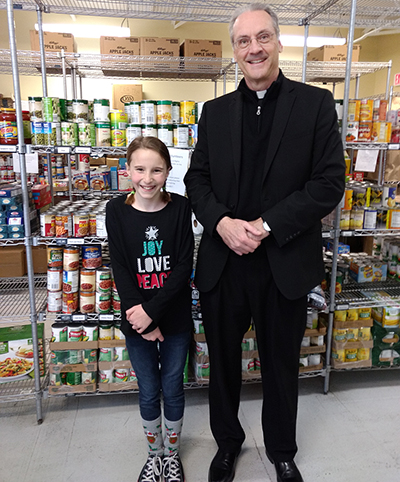
Our sack lunch programs in Hastings and Lincoln have allowed us to interact with the poor and needy in a unique manner. Recently, a man came in for a sack lunch. I was informed he was ‘smiling ear to ear.’ I was told his joy and happiness were infectious.
As he turned to leave after picking up his meal, the volunteers noticed he did not have legs. He hobbled out on his artificial legs with a smile of gratitude.
The state legislature took an important step toward meaningful payday lending reform by advancing LB194. While the introduced legislation was initially unable to advance from the Banking, Commerce, and Insurance Committee, a recent amendment provided an agreeable foundation for compromise that unanimously advanced from committee and first round of legislative debate. LB194 is common sense policy that gives a preferential option for the poor.
“Little Melba and Her Big Trombone,” by Katheryn Russell-Brown, illustrated by Frank Morrison. Lee and Low Books, New York, 2014, 32 pages, Grades 2-4.
If you are not highly familiar with that statement, look into the work of Father Michael Gaitley MIC. Read his books, listen to his talks, watch his videos and attend his events. He is a great resource on the Gospel’s message of mercy.
State Senators advanced LB1040, legislation which provides commemorative birth certificates for families who experience miscarriage prior to 20 weeks gestation. LB1040 received unanimous support from the Health & Human Services Committee after heart wrenching testimony from “Warrior Moms” who shared experiences of miscarrying their unborn children. While the legislation had overwhelming support during first round of debate, several Senators voiced hostility. The legislation has two more rounds of legislative debate.
In my last two columns, I’ve discussed situations in which we can become distracted by other people’s children at Mass. But what if that distracting kid is your own kid?
The Nebraska State Legislature held a historic debate on important education choice legislation, LB295, last Thursday and Friday (March 22 and 23). State senators, chief among them Sen. Jim Smith (Papillion) and Sen. Lou Ann Linehan (Elkhorn), boldly advocated on behalf of the low-income and working-class families who would benefit from additional scholarship opportunities. The debate, however, was accompanied with a “campaign of misinformation” about the legislation and about parochial and private schools.
Recently at one of the state prisons somewhere south of the Platte River, I visited an inmate who entered the Catholic Church not long ago. He happens to suffer from several serious illnesses. The more his health deteriorates, the stronger his faith becomes.
As we talked, he asked me this question: Since babies are too young to have committed any actual sins, why are they baptized? He rightly understood that we humans inherit a sinful condition from our first parents Adam and Eve, but just wanted further clarification.
In my last column, I wrote about loud and unruly kids who can be distractions during Mass. I suggested that they are only distractions if we allow them to be distractions, and that this is more likely if we do not mentally and spiritually prepare ourselves before we walk into the church.
But loud and unruly kids are not the only ones who distract us at Mass. Sometimes it is the cute little newborn in the pew right in front of us which is even more distracting.
Last Tuesday (March 13), the state legislature advanced the state budget bill (LB944) through first round of debate. Nearly the entire six-hour debate centered on critical pro-life language that ensures taxpayer dollars are not used for abortion services.
The budget’s pro-life provision was championed by several senators who represent legislative districts in the Diocese of Lincoln. Their leadership was indispensable to the passage of the provision through the first round of debate. Notably, the legislature still has two more rounds of debate, one of which will already have taken place by the time you read this.
Many are familiar with the story of St. Gianna Beretta Molla. She was born in Magenta, Italy in 1922. As a young woman she considered entering religious life but, with the intercession of Our Lady of Lourdes, discerned that God was calling her to the married life. She asked our Lady of Lourdes to send her a holy man, and that prayer was answered.
If you prepare to go to Mass like you prepare to go to a doctor’s appointment, you will leave Mass with about as much grace as you had before the opening prayer.
The grace is always there for us, but too often, we don’t receive it because our minds wander to the missed field goal, the phone call we forgot to return, or what we are going to order for breakfast after Mass.
The Holy sacrifice of the Mass is the most powerful event in our life. To fully appreciate the grace made available to us at Holy Mass, it is wise to prepare mentally and spiritually for the miracle that will happen as the priest consecrates the bread and the wine, and they miraculously become the body, blood, soul, and divinity of Jesus Christ.
If you really stop and think about this miracle, you will come to appreciate the wisdom of taking the time to prepare for this before you walk through the doors of your church. You will also come to appreciate how important it is to stay engaged with all the prayers as well as the quiet moments during Mass.
It is estimated that there are 20 million human trafficking victims worldwide. As we have been uncovering in Nebraska, human trafficking occurs in our own back yard. Each month, somewhere between 600 and 700 individuals sold online for sex in Nebraska have indicators of being trafficked. There is good reason why this exploitation of human beings is known as a form of modern-day slavery.
St. Peter Chrysologus said, “Fasting is the soul of prayer, mercy is the lifeblood for fasting.”
Not long ago, after exiting our main building dedicated to St. Joseph, I spotted a man who appeared to be homeless and in his mid-30s. After seeing him and since he was across the parking lot, I yelled out, “How are you doing?”
He replied,” Great! It’s been 92 days without alcohol!”
The General Affairs committee of the Nebraska Legislature held a public hearing on LB747 Feb. 26. This legislation would regulate entities known as bottle clubs, which essentially act as “bring-your-own-beer” drinking establishments that feature nude dancing and other sexually immoral behaviors. LB747 was introduced by Sen. Theresa Thibodeau, an Omaha state senator and, also, a member of St. Robert Bellarmine Parish. The legislation has broad support among legislators, but is seeking a path forward in the legislative process.
“O give thanks to the Lord, for he is good, for his steadfast love endures forever” (Ps 136:1).
Since visiting my mother at a skilled nursing facility for several months on a regular basis, I couldn’t help getting to know the staff and other residents and family members. As my mother’s window overlooks one of the entrances, one can see who is coming and going.
The Center for Applied Research in the Apostolate (CARA) is a Catholic research center which conducts social scientific studies about the Catholic Church. They began their work in 1964 and published their first report in 1965. The timing of this report was providential because it captured some important national statistics right before the sexual revolution was able to fix its icy grip on the American culture, the Church, and the family.
Through CARA’s annual reports, we can chart a number of statistics over the course of more than five decades. These statistics show us that although the overall Catholic population of the United States has nearly doubled, there are fewer Catholics actively practicing the faith today than there were in 1965.
As many of you know, there is a very important education bill making its way through the Nebraska Legislature – LB295: Opportunity Scholarships Act. Last Legislative session, LB295 was voted out of the revenue committee, making it the first “school choice” legislation to do so in more than 25 years.
We’ve asked you to engage your senators before, but now is a crucial time to make your voice heard and help to change the lives of low-income and working-class children across the state of Nebraska.
“Gregor Mendel: Genetics Pioneer,” by Della Yannuzzi. Franklin Watts, New York, 2004, 111 pages, Grades 4-6.
The Catholic Church has sometimes been attacked in recent centuries for being opposed to science. These critics would have us believe that the Church is all about faith and has little to do with reason. St. John Paul II dispelled these attacks with his outstanding encyclical, Fides et Ratio (Faith and Reason) The Holy Father brilliantly demonstrated that both faith and reason lead people to the truth, which is God.
On Easter Sunday, when St. Mary Magdalene discovered the empty tomb, she thought someone had taken the dead body of her Lord Jesus Christ away. When she saw Jesus, but did not recognize Him, Jesus said,
“Woman, why are you weeping?” She replied, “Sir, if you have carried him away, tell me where you have laid him, and I will take him away” (Jn 20:15). We know that Jesus ultimately revealed His presence to her and she left consoled.
I love walking through the lobbies of our offices where people off the street come in seeking help.
As usual, this legislative session saw the introduction of legislation that would require some form of sexual orientation and gender identity (“SOGI”) non-discrimination. This year’s version prohibits psychologists from discriminating on the basis of SOGI. While this legislation appeals to the agreeable intention of ensuring that nobody is unjustly discriminated against, it contains fatal flaws that trample on the professional judgment and conscience rights of psychologists.
“How To Be An Elephant: Growing Up in the African Wild,” by Katherine Roy, author and illustrator. Roaring Brook Press, New York, 2017, 48 pages, Grades 2-4.
Families are the basic structure of any society. Within families, the younger members are protected, educated and given the necessities of life. Since they are young and vulnerable, the older family members guide their lives through helpful learning experiences.
Catholic Social Services held its annual volunteer appreciation luncheon in Hastings Feb. 12. I estimate that 75 volunteers in Hastings made it to the event.
If we compare the average youth today to the average youth in 1960, we would notice that today’s youth are spending much more time in daycare, school, school sports and extracurricular activities, club sports, tournaments, dance, piano and other types of lessons, camps, clinics, recitals, etc... Matthew Kelly asks us if we are parents or chauffeurs.
When we add technology into the life of our youth, it can cause an almost total replacement of both parents and friendships because the other interests and activities of the youth typically do not shrink to allow screen time. Interaction with family and friends inevitably shrinks.
But in this particular column, I’m not going to focus on technology and media, I’m going to focus on the people who surround our children when they are at all these events and activities. Thankfully, the vast majority of people who are coaching, instructing and chaperoning our kids are looking out for our child’s best interests. In fact, most of them are concerned parents themselves. As with educators, priests and others who work with kids, the predators are rare, but the pool of potential victims is enormous.
The legislature’s Appropriations Committee held a public hearing on pro-life language in Governor Pete Ricketts’ proposed budget Feb. 5. The public hearing was a study in contrast between Planned Parenthood supporters and taxpayers who refuse to have their tax dollars given to entities that engage in abortion.
The public hearing also demonstrated the power of a single state senator to control the destiny of certain legislative efforts. The pro-life language in the proposed budget is no exception, and your action is needed.
“Firebird: Ballerina Misty Copeland Shows a Young Girl How to Dance Like the Firebird,” by Misty Copeland, illustrated by Christopher Myers. G. P. Putnam’s Sons, New York, 2014, 32 pages, K-3.
“You Should Meet: Misty Copeland,” by Laurie Calkhoven, illustrated by Monique Dong. Simon Spotlight, New York, New York, 2016, 48 pages, Grades 2-4.
The Universal Church celebrated the memorial of St. Agatha, virgin and martyr Feb. 5.
St. Agatha was born in Sicily around the year 231, at a time in the Church when it was illegal to practice the Catholic faith. It is said that her beauty attracted many suitors. Cooperating with the promptings of Jesus by the inspirations of the Holy Spirit, she accepted the divine invitation to live a celibate life as a consecrated virgin. One suitor would have nothing of it. His name was Quintianus.
In December, I wrote a column titled “Sexual abuse in America.” The column was about the clergy abuse scandal that occurred in the Catholic Church in the 1960s and 1970s.
My column pointed out that the scandal was misconstrued by those hostile to Catholicism, and that since that time, the Church has vastly improved regarding the protection of children. The improvement is unmatched by other large institutions in the U.S., but rarely mentioned in the media. The scandal was so shocking that it still comes up frequently today, and often involves significant inaccuracies.
To bring harm to the innocent is 100% contrary to the Gospel and, therefore, 100% contrary to the teachings of the Church. But this prohibition against harm is not limited to Catholics. It applies to everyone.
Could the media and our federal government be ignoring much larger sex abuse scandals in the United States? Do we blithely accept scandals that impact millions of children in our country every day? For instance, is it possible that sexual misconduct in our schools, known as educator sexual misconduct (ESM), is overlooked due to the attention given to the clergy abuse scandal?
As Catholics, we have the duty to be informed, stay engaged, and make our voices heard in politics. While this is a formidable task, our Lord provides the grace-filled opportunities we need to be salt and light for our political society as we seek to build the common good. As I have frequently quoted Pope Francis: “If indeed ‘the just ordering of society and of the state is a central responsibility of politics,’ the Church “cannot and must not remain on the sidelines in the fight for justice’” (Evangelii Gaudium, no. 183).
One such opportunity is Catholics at the Capitol which takes place Thursday, Feb. 15, at the Cornhusker Marriott Hotel in Lincoln. The event begins with free registration at 8 a.m.—coffee and rolls will be served. Prayer begins at 8:30 a.m. led by Bishop James Conley.
On Wednesday, Jan. 17, I had the privilege of celebrating the 8:15 a.m. school Mass at St. Teresa in Lincoln. I was invited to celebrate the Mass and preach about St. Gianna’s Women’s Homes, in anticipation of Catholic School’s Week.
Prior to offering this Mass, I learned that the student council voted to conduct a fund drive for St. Gianna’s. Each year, the school does a few projects for needy causes to raise awareness in the minds of the students of those of us who are less fortunate.
Two legislative bills on education choice each had important moments in the legislature last week. LB295 now has a senator committed to prioritizing the legislation, thereby ensuring that tax credit scholarship bill will be debated by the whole legislature.
LB804, a bill that allows families to more responsibly save for K-12 tuition expenses, received a public hearing. Both bills give families more robust freedom in choosing an education best suited for their child.
A few days ago, a woman called me to thank us. She said if it was not for Catholic Social Services, she would not have been able to escape a man who abused her for more than 30 years.
I, in turn, must thank all of our supporters, for without your help, we would not have been able to help her.
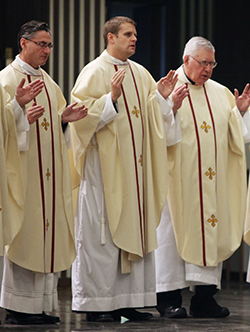
The “orans posture” is the posture of the priest during certain parts of the Mass, including the Our Father. He stands with his hands out, palms up and elbows bent. Until recently, the priest was the only person using the orans position during the Mass. Slowly, that has begun to change and well-meaning people disagree as to whether this change is good or bad.
This legislative session, our state legislature will consider a vitally important pro-life policy proposal: keeping taxpayer dollars away from organizations that support abortion. This common-sense, pro-life proposal will undoubtedly be a highlight of this year’s legislative session. The following provides some basics about the policy—and, as always, invites you to advocate on behalf of the unborn.
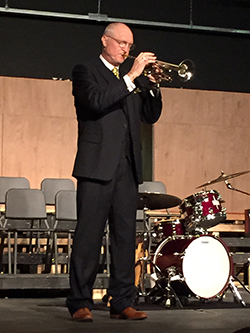
I am happy to announce that Catholic Social Services of Southern Nebraska is holding its 15th annual Trumpet Fest Sunday, Feb. 11 at Pius X High School in Lincoln, at 3 p.m.
As in past years, it is being held in memory of Mac McCune and Dennis Schneider. A hat will be passed during the intermission for a free-will offering. All proceeds will be used to help the many needy individuals and families that come to us in crisis.
Travel has been one of my hobbies for the past 25 years. At first, I was interested in seeing mountains, beaches, oceans, and famous cities. I saw amazing things and experienced a lot of different cultures, but each time, I always felt like something was missing. About seven years ago, something happened that changed the way I look at travel today.
In July 2011, we set out for a family trip. Our children were all pretty young, and we had never driven further than Kansas City with the entire family (seven of us in all) in one vehicle. Therefore, I did not set any concrete plans about where we would go and how far we would try to drive each day. Maybe we would make it to Glacier National Park and maybe we would turn around at North Platte and return home. We had planned to be gone for two weeks, which meant that we had to find a Catholic Church on at least two occasions during our trip.
It was the second Mass where I realized that my family had an amazing ability to evangelize people. We walked into a Catholic church in Eureka, Calif. (yes, we made it to Glacier National Park, then kept going). The people in the church were excited to see a family at Mass and after Mass, several people, including the priest, came up to talk to us. We were sharing the joy of Christ by simply going to Mass.
Last week’s Southern Nebraska Register featured a Q&A on LB295. LB295 is a legislative bill that provides more scholarship opportunities for low-income and working-class families to choose a parochial or private education for their children. If you have not yet read the Q&A, please do at this link.
To build on the Q&A, I want to call each and every one of you to action. I challenge you to contact your state senator. Low-income and working-class families are relying on us to help them experience educational freedom. To assist, this column will provide a roadmap for contacting your state senator. Notably, you can use this roadmap for any legislative issue!
I am sure many of us know of the calling of the great prophet Samuel. His mother Hannah was suffering from infertility and promised the priest Eli if she conceived a son, she would give him to the Lord. God answered her prayer and she gave birth to Samuel, whom she gave to Eli in the service of the Lord. It was Samuel who anointed David King of Israel.
“He who reaps receives wages, and gathers fruit for eternal life, so that sower and reaper may rejoice together. For here the saying holds true, ‘One sows and another reaps.’ I sent you to reap that for which you did not labor; others have labored, and you have entered into their labor” (Jn 4:36-38).
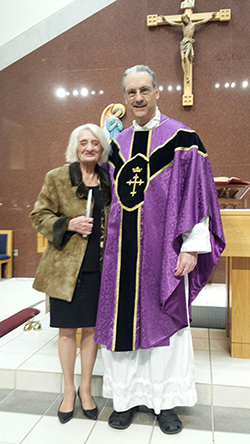
Early last year, I received a call from John Hansen about a woman who was interested in entering the Catholic Church. After taking the call, he informed me she was elderly and in fragile health.
Throughout Nebraska there are low-income and working-class families who desire to send their child to parochial or private school, but lack the financial means to exercise this educational choice. For example, in 2017, the Children’s Scholarship Fund of Omaha provided 1,803 scholarship opportunities for low-income families to access private or parochial education. Regrettably, they also turned away hundreds of families for lack of scholarship funds. And while our three dioceses and parochial school systems do tremendous work to give every kid a chance at a faith-based education, it is not always financially possible to provide for every student.
“The Three Kings: The Journey of the Magi,” by Geraldine Elschner. Pictures by various artists from the Renaissance. Minedition, Hong Kong, 2016, 32 pages, Grades 1-4.
In the fourth chapter of his first letter, St. John the Evangelist tells us that God is love and that the evidence of our love of God is our love of neighbor, and the evidence of our love of neighbor is our acts of charity for them. Jesus Himself said, “Truly, I say to you, as you did it to one of the least of these my brethren, you did it to me” (Mt 25:40).
This column originally appeared in the Southern Nebraska Register Dec. 22, 2017.
George Frideric Handel’s famed oratorio, Messiah, recounts—in a musically dramatic way—the life of Jesus Christ. In Part I, Handel relies on the prophecies of Isaiah, reminding us of God the Father’s promise to Israel—and all the nations—that a Lord will be given to them to rule in justice and peace. Particularly, Handel draws from Isaiah 9:6 which foretells the birth of the Messiah: “For unto us a child is born, unto us a son is given, and the government shall be upon His shoulder.”
As we celebrate the birth of Jesus, we would do well to consider the implications of this decisive fact of human history for our political life. Do we place government on the shoulders of the Christ Child, who has fulfilled the prophecies of Isaiah? Does Christ shoulder the burdens and evils of our politics? Do we allow Christ to be the foundation for our government? Or do we put our hopes in false messiahs, the political demagogues of our day?
“Joseph also went up from Galilee, from the city of Nazareth, to Judea, to the city of David, which is called Bethlehem, because he was of the house and the lineage of David, to be enrolled with Mary his betrothed, who was with child. And while they were there, the time came for her to be delivered. And she gave birth to her first-born son and wrapped him in swaddling clothes, and laid him in a manger, because there was no place for them in the inn” (Lk 2:4-7).
I am sure we are all familiar with this story of Joseph and Mary frantically looking for a place to stay. It was an urgent need because Mary was ready to give birth to the Christ Child, the Savior of the world.
Just days ago, while walking through our lobby, I greeted an elderly couple who had lost everything except the clothes on their backs in a house fire. Luckily, they have a place to stay temporarily. However, they were there looking for assistance as they start over from scratch.
Last week, the U.S. Supreme Court heard oral arguments in the case of Masterpiece Cakeshop, Ltd. v. Colorado Civil Rights Comm’n. Masterpiece represents a watershed moment for free speech and religious liberty rights and the legal protections that some states have offered for sexual orientation and gender identity. The case illustrates the ideological clash between differing views on marriage and human sexuality. In addition to the background facts, there are a couple points worth consideration.
Dear Readers: I hope that you have enjoyed the “Children’s Literature Bookshelf” during the past year. Buying books for your children, grandchildren, or nephews and nieces can be one of the most pleasant Christmas activities of the season.
“On this mountain the Lord of hosts will make for all peoples a feast … He will swallow up death for ever, and the Lord God will wipe away tears from all faces” (Is 25:6-8).
These beautiful words in the book of the prophet Isaiah attempt to describe what those who have saved their souls with the grace of God will experience in heaven.
Notice God did not promise we will not have tears in this life, but that He would eventually wipe them away. In other words, God never said He would take our crosses away in this life, but that He would help us carry them.
The liturgical season of Advent invites us into the dramatic moment of salvation history: the Incarnation of the God-Man, Jesus Christ. During Advent, we consider how Israel anxiously awaited the Messiah and how we can better prepare for the Second Coming of Christ in Glory. At the Nebraska Catholic Conference, we are also preparing for another advent—the advent of the 2018 legislative session.
When Jesus looked up, he saw some wealthy people putting their offerings into the treasury. Then, he noticed a poor widow putting in two small coins. He said, “I tell you truly, this poor widow put in more than all the rest; for those others have all made offerings from their surplus wealth, but she, from her poverty, has offered her whole livelihood” (Lk 21:1-4).
Recently, while reading this gospel passage, I thought of an encounter I had with a homeless man in search of food on a chilly evening. While walking through our lobby after office hours, I spied a homeless man peering through the window. I soon learned what he was looking for. He was hungry and was looking for something to eat.
What do you say when you are talking about faith and someone uses the clergy sex abuse crisis to criticize the Catholic Church? They might say, “Why would I listen to a bunch of pedophile priests?”
“Oh, what happiness would be ours if all men, individuals, families, and nations, would but let themselves be governed by Christ!”
These words were written by Pope Pius XI on December 11, 1925, in his encyclical Quas Primas, which instituted the solemn liturgical feast we recently celebrated: Our Lord Jesus Christ, King of the Universe. Though nearly a century old, the truth of these words; in fact the whole of Quas Primas resonates across time and space, providing sound guidance for our own cultural and political situation. Following some introductory context, three points, in particular, demand attention.
“Dive! World War II Stories of Sailors & Submarines in the Pacific,” by Harry Allard, illustrated by Deborah Hopkinson. Scholastic Press, New York, 2016, 367 pages, Grades 7-9.
Yesterday, before I typed these words, two men walked through our doors asking to speak to “the father.”
At Catholic Social Services, we have case workers that meet with clients who come in requesting help of some kind, whether it be emergency services, food, clothing, furniture or vehicles. Sometimes, people want to talk to me in order to ‘bypass’ the system.
This time of year prompts an opportunity to consider the meaning of ‘thanksgiving’ and how it can fundamentally impact our life and our view of the world. In particular, thanksgiving and gratitude, stemming from an intimate relationship with the Eucharist, can impact our view of politics.
“The Three Billy Goats Gruff” by Jerry Pinkney. Little, Brown and Company, New York, 2017, 32 pages, Grades K-3.
Classic fables and fairy tales hold the fascination of readers because they reveal important lessons about the need to be truthful and charitable towards others.
In these morality stories, readers are exposed to some characters acting selfishly. These creatures are easily seen for their lack of virtue and young children instinctively know not to trust them. Other actors in the drama are trying to achieve something good. The bad characters try to stop good individuals from achieving these beneficial goals.
Just days ago, St. Gianna’s held their annual Thanksgiving dinner. For those who may not know, St. Gianna’s is a 24-apartment home for women escaping abortion and domestic violence. It is run by the Marian Sisters of the Diocese of Lincoln.
Did you ever have a newcomer move into your town or neighborhood?
A decade or so before I was born, my parents met a new guy in town. He could not move around well or take care of himself, but he was a gifted storyteller. My family was so enamored with him they actually invited him to live with us so we could take care of him.
From the start, he was accepted as a member of the family. Everyone in town talked about him fondly and asked us about his latest stories. As I grew up I never questioned whether he belonged in our family, because he was a part of our family before I was even born.
Recently, I attended the Catholic Medical Association’s (CMA) annual educational conference, Medicine at the Service of Marriage and Family: Transforming the Culture with Truth and Love. The conference provided insight into the innumerable ways that our Catholic healthcare professionals are creating an authentically Christian culture in the medical profession. The conference contained some lessons for us all as we seek to influence culture and politics.
Pope St. Leo the Great became the Supreme Pontiff in the year 440. In his 21 years as Holy Father, he battled heretics inside and outside the Church and confronted barbarians (including Attila the Hun) who wanted to destroy Rome.
In one of his famous sermons, he reminds us that from our baptisms, we all have royal and priestly characters in our souls which, although different from the ordained priesthood, share some common characteristics.