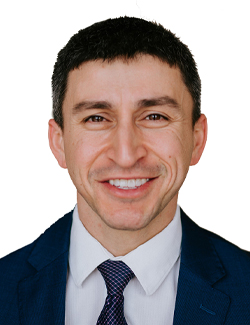
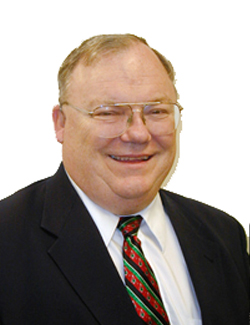
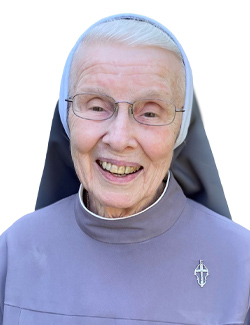
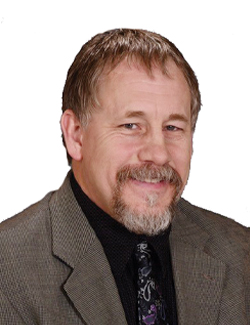
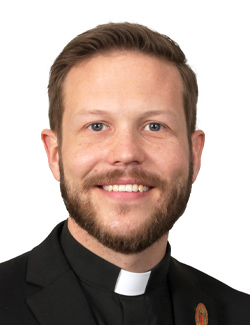
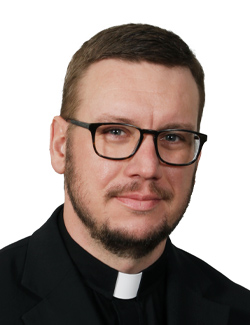
When I became the Vocation Director for the Diocese of Lincoln in June of this year, I knew that I needed to find the right “sales pitch” for men who were potentially called to discern the priesthood.
“Give your life to Jesus and you’ll always be filled with peace…” “As a priest, you’ll never be bored…” “I mean, come on, you get to hold Jesus in your hands!” “Trust me, laundry gets a lot easier…” These were all true, but they didn’t quite resonate as “give your life away” true to me.
During the fall season, one week I always look forward to is the first week of October: In view of the liturgical calendar, these are the saints we as a Universal Church have the privilege of honoring: St. Thérese of Lisieux; the Guardian Angels; St. Francis of Assisi; St. Faustina Kowalska; Mary, Our Lady of the Rosary.
Every year for the past eight years, Catholic Social Services of Southern Nebraska, in partnership with the Knights of Columbus, has hosted the annual “Coats for Kids” community event. Together, we distribute hundreds of coats to children who would otherwise be left in the cold or wearing donated, worn coats that don't quite fit. This year’s event was particularly special as it took place in our newly designed building, tailored for events just like this one!
When I was a bit younger (and stupider) I had little regard for commemorative events. These events seemed unnecessary and perfunctory. They seemed to me to be forgotten before they even started, and at best served the purpose of making people feel good for ever so slight a moment. As I’ve grown older (and reality has knocked some sense into me), I’ve recognized the foolishness in these immature thoughts.
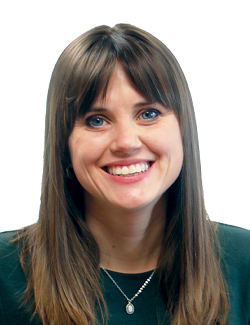
by Katie Ostgren Director of Development & Stewardship, Diocese of Lincoln
When we talk about the benefits of Catholic schools, we often talk about Catholic identity, academic rigor, and great communities. But we often fail to draw the appropriate amount of attention to one of the best aspects of Catholic education, in my experience: the educators themselves.
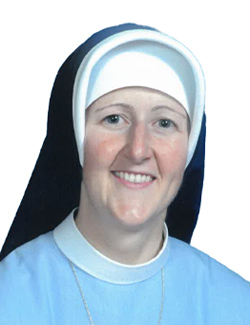
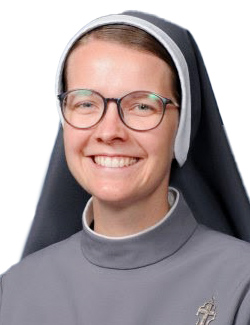
by Sr. Veronica, Marian Sisters of the Diocese of Lincoln
Who is St. Francis of Assisi, and what would he say to us today, living in a country known for its lifestyle of abundance, many seeking happiness in material things?
From hot summer days to frigid winter ones, a particular homeless man comes into our office at Catholic Social Services. He wears baggy, worn-out clothes that haven’t been washed for weeks, likely what he’s slept in each night as well—sometimes under bridges and in doorways, never quite resting because it’s difficult to trust others for fear they might steal his blanket, or worse.
God, completely out of love, has revealed himself to his people in many different ways through the centuries. We see it from the beginning, how he walked with Adam and Eve, or showing up to greet Moses in the burning bush. God desires to be present with us. Of course, God becoming man in the incarnation and living with us, both fully human and fully divine, was an unbelievable revelation to us about himself.
After his ascension, Jesus sent the Holy Spirit to guide us. Right there on Pentecost, the Church was born and began to continue the mission of our founder Jesus Christ. But we should never pretend that carrying out, or even understanding the mission has been easy. From the earliest days there were disagreements.
One of the many blessings we have received at Catholic Social Services of Southern Nebraska over the past year has been the expansion of several of our programs, including our Immigration Legal Services program in Lincoln.
This year’s Bishops’ Pro-Life Banquet and Conference is on Oct. 6 and 7. And registration closes at 11:59 p.m. Sunday, Oct. 1. If you’re lucky and call into the office (402.477.7517) on Monday, we might still be able to squeeze you in.
In either case, the clock is ticking and you need to act and seats are filling up fast. So, to join hundreds of your closest pro-life friends as we celebrate the great pro-life work taking place throughout Nebraska, go to www.NEcatholic.org and register for the annual Bishops’ Pro-Life Banquet and Conference.
My Sept. 8 column, “Catholic men: be honest,” created a little discussion with a few of my friends. As a result of those discussions, I thought I would continue the topic this week.
By Victoria Fassett Campus Minister UNL Newman Center
“Jesus turned, and saw them following, and said to them, ‘What do you seek?’” John 1:38
The first weekend of September, we invited our student leaders on a retreat aimed at getting to know the Holy Spirit more deeply. We spent the weekend at Broomtree in South Dakota in extended prayer, fellowship, and worship. We’ve hosted many of these retreats before, but this was the first one tailored specifically to the students who have said yes to living mission.
By Fr. Christopher Stoley Sacred Heart Church, Crete Hispanic Ministry
The times I feel most like a priest are when I am doing things in Spanish.
Allow me to explain: a priest, by definition, is one who offers sacrifice. If there is anything that has described my Hispanic Ministry experience, it’s sacrifice. To be clear, that’s not a bad thing—it makes me feel like a missionary, giving up who I was, in order to be who the people need me to be. This has been invaluable in my ministry as a priest, in my service to both the Hispanic and the Anglo populations. In order to clear this up, I should probably take you through my journey into Hispanic Ministry.
Nebraska’s latest pro-life law has been under attack since the moment it was advanced by a super-majority of State Senators and signed into law by Governor Jim Pillen. But the attacks aren’t the end of the story, thank God! Recently, pro-life values have won again in Nebraska.
This last session, the Nebraska Legislature passed LB574 (introduced by Senator Kathleen Kauth of Omaha), which provides two critical protections for human dignity. The first protects children from the rise of transgender ideology. LB574 prevents children from being exposed to so-called “gender-affirming surgeries” which harm children by removing otherwise healthy body parts. It also significantly regulates access to puberty-blocking drugs and cross-sex hormones, which minors have had unfettered access to prior to this legislation.
The second protection is for preborn babies, and ensures that babies are saved from abortion once they are 12 weeks gestational age. While we, of course, want to see more significant protections for children and babies, LB574 is a significant step forward toward safeguarding human dignity and saving lives in Nebraska.
Thirty-two years have passed since Tran first set foot in the United States. As a young boy, he left Vietnam alongside his mother, driven by the hope of a better life.
“Impossible Escape: A True Story of Survival and Heroism in Nazi Europe” By Steve Sheinkin. Roaring Books Press, New York, 2023, 243 pages, Grades 7 and higher.
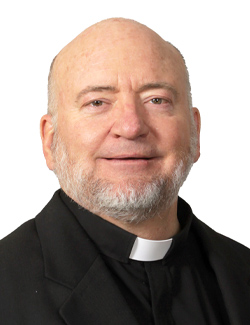
by Fr. Thomas Brouillette Vicar General, Catholic Diocese of Lincoln
Dear Brothers and Sisters,
Courage and Hope.
I was asked to share some thoughts with you by way of introduction. Bishop James Conley asked me to take the role of vicar general in our diocese, and that he had prayed a lot about it and my name kept coming to mind. I was wondering if he hadn’t confused me with many of our other priests in our diocese that share the name ‘Tom.’ A few different ways, I suggested others are more than qualified for the position and could take the job. As you can see, I didn’t prevail.
by Veronica Hotovy St. Gianna Program Manager Catholic Social Services of Southern Nebraska
Roughly a year and a half ago, we began our first Bible study at St. Gianna Women’s Home, upon the request of the visiting Christ in the City missionaries. While I wasn’t certain exactly how successful our turnout would be, we agreed, thankful that the female missionaries wanted to live out a part of their service at St. Gianna’s.
Pro-Life Party! The annual Bishops’ Pro-Life Banquet & Conference is just around the corner, and you should register! Pro-lifers from across the state of Nebraska will convene in Lincoln Oct. 6-7 to celebrate all that we have accomplished in this first year since the demise of Roe v. Wade.
In this new Dobbs era, we will focus on our theme of the truth, and how it sets us free. This is a critical theme in an age of misinformation from numerous sources, including those who are supposed to be the most reputable and truthful in their dealings.
by Fr. Brian Kane Rector, St. Gregory the Great Seminary; Director of Seminarians
“Put out into deep water and lower your nets for a catch.” Luke 5:4
As we prepare for the annual Bishop’s Appeal for Vocations collection at the end of September, I want to be a voice of thanks on behalf of the young men discerning a call to the priesthood. The faithful of the Diocese of Lincoln are crucial in encouraging vocations to the priesthood and supporting our seminarians in reaching that goal.
Despite the triple digit heat wave we experienced a few weeks ago, slowly but surely we are inching closer to the best season of the year (No, not pumpkin spice season): the season of fall.
In a world that often seems preoccupied with the hustle and bustle of daily life, it is heartwarming to witness young people stepping up to make a difference in their communities. Recently, 15 students from Hastings College did just that by volunteering for a day at Catholic Social Services of Southern Nebraska.
In the past few years, some Catholics have noticed that there are fewer and fewer men involved in an active life of faith in parishes across the country. Catholic men such as Bishop Emeritus Thomas Olmsted, Matthew Christoff, Father John Hollowell, and others, have written and spoken about this as a crisis in the Church.
In a press conference Aug. 30, opponents of school choice (so-called “Support Our Schools”) announced the outcome of their 90-day effort to gather signatures in an attempt to repeal the Opportunity Scholarships Act. This is a good chance to tell you what opponents announced at that press conference, what it means, and what’s next.
“Yukie’s Island: My Family’s World War II Story” by Kodo Kimura and others. Illustrated by Kodo Kimura. Roaring Brook Press, New York, 2023, 48 pages, Grades 2-4
by Amy Reisen, Coordinator of Youth Evangelization and Discipleship
What a whirlwind the last four months have been. The warm and sunny summer days seem to just fly by each year. In my time as a teacher, I remember always thinking summer would be the time to rest, relax, and refresh. Instead, those months came with seeing everyone I hadn’t seen, resetting all the areas of my classroom I had neglected during the school year, and ultimately trying to fit a whole year’s worth of catching up into two and a half months.
Last week, my beautiful wife, Makayla, and I looked upon the angelic face of our precious daughter, Julia Rose Venzor, for the first time.
I’ve sat staring at my computer for a good 20 minutes trying to figure out what else I should say besides this. I’ve developed several different openings or themes for my column, but nothing has taken root. So, instead, you’re getting my scattered and selected thoughts about the gift of human life… and a cute picture of my beautiful little girl!
by Rachael Tvrdy, Director of the Office of Family Life and Discipleship
In 1988, Pope John Paul II wrote an apostolic exhortation “Christifidelis Laici” (Christ’s Faithful Laity) calling the laity “to be the salt of the earth” and “the light of the world.” This document is as relevant today as it was 30 years ago.
In June, at age 35, I moved back to college at the University of Nebraska-Lincoln (UNL).
When I moved to UNL this time, instead of wearing a Blink 182 T-shirt and ill-fitting jeans like I did at 18, I donned a Roman collar. Instead of a damp dorm room in Smith Hall, my accommodations are a comfortable rectory (big upgrade). And instead of a soul searching for meaning, I’ve arrived with a heart burning with a mission to find the lost souls on campus.
Catholic Social Services of Southern Nebraska (CSS) in Auburn operates not only as a place where those in need can secure food for their families, or where an individual living on a fixed income can access emergency cash assistance when their only vehicle needs repair, nor is it only a place for local folks to shop at the St. Francis Gift & Thrift. It is, in fact, much more than this. Catholic Social Services in Auburn provides essential services that go beyond the surface, touching hearts and uplifting spirits.
A hodgepodge of thoughts, Tom… is that the best you have for us this week? And the answer is “Yes! That’s the best I have!” I now invite you into my stream of consciousness and hear what I have to say about some important, slightly related topics. Unlike the Grateful Dead, it won’t be a long, strange trip, it’ll be a short, informative, out and back.
By Fr. Bernard Lorenz St. Patrick Parish in McCook Hispanic Ministry
Mom is calling us home to the family.
Mom who? The Blessed Virgin Mary (BVM), Mom of Jesus and all humanity. (John 19:26-27) In the 38 years of priesthood that the good and gracious God has allowed me to celebrate, I have come to know and love my mom Mary, mother of Jesus, more and more.
For the past 27 years, Catholic Social Services has hosted the CSS Memorial Golf Classic and Auction in memory of one of our own. We have recognized former volunteers, donors, staff and community members who have impacted our mission by performing the Works of Mercy in response to the call of God.
The misplaced effort to repeal historic school choice legislation in Nebraska is now, thank God, in countdown mode. There are fewer than 30 days for opponents of school choice to collect signatures in the effort to repeal LB753, the Opportunity Scholarships Act.
Whether growing crops on the farm, or flowers and vegetables in gardens, one of the biggest challenges of raising plants revolves around weeds. With or without moisture, weeds still find a way to make their presence known.
We’ve been talking a lot about school choice lately, but it’s hard not to. Our recently passed law, to get more scholarships to low-income families, has the power to transform generations of children by offering them more and better educational opportunities. But that legislation is being threatened by opponents who seek to repeal the law. So, what can you do to protect school choice for Nebraska families? I’m glad you asked, because these future scholarship families need your help today!
I had the privilege of going on a Marian pilgrimage to Fatima, Lourdes, and Medjugorje in May 2023, with the help of many generous benefactors and the support of my community, the Marian Sisters of the Diocese of Lincoln. I experienced Mary calling me to her heart as my spiritual mother to these holy apparition sites.
by Katie Ostgren Director of Development & Stewardship, Diocese of Lincoln
Around this time every year, I feel like the Ostgrens need to catch our pastor at the end of Mass and clarify something. Usually it’s me, with a bit of nervous laughter, saying something like, “Hey, Father! Long time no see—just wanted to let you know that we didn’t move, or ghost you, or anything like that—haha! We still belong to the parish, and we’re definitely still Catholic! OK—see you in August!”
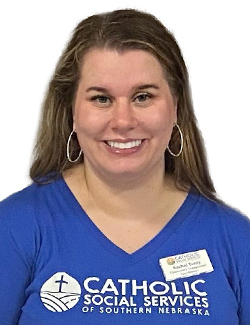
by Rachel Tvrdy Community Engagement Coordinator, Marketing & Development Catholic Social Services of Southern Nebraska
Do you recognize the quote, “no man is an island?” It’s the opening line of John Donne’s poem of the same name: “No man is an island entire of itself; every man is a piece of the continent, a part of the main.”
by Jeremy Ekeler, Associate Director of Education Policy
In honor of the recent anniversary of his birthday, I’d like to tell you what the first Archbishop of New York, “Dagger” John Hughes, can teach the Nebraska faithful.
Hughes was born in English-ruled Ireland June 24, 1797. When he was 15 years old, his sister died. Because the British would not permit a Catholic burial, John smuggled in a handful of blessed dirt and sprinkled it on her grave. Historians point to this moment as an indication of Hughes’ rebellious streak. I would argue that was not a “streak,” that was his Catholic ethos.
by Jeff Schinstock, Director of Religious Education
Growing up on a farm in southwestern Kansas, I always watched my dad, my grandfather and my uncle, and marveled at all the things they knew.
My favorite days usually involved a major mechanical job; we had lots of equipment that needed regular maintenance. On those days we were all four together and I would marvel at the conversations. There was always baseball talk, but they knew history and politics. There was also some religious discussion, often involving our own local parish.
Lincoln Diocesan Schools have so many great things happening. We can celebrate this, year in and year out, because our community, our tradition and our commitment to the Catholic faith and to the students are clearly established.
When I was a student at Aquinas High School in David City, I wrote an essay on the importance of Catholic education and won first prize. That event was over 50 years ago, and I am not sure that I, as a 17-year-old, knew the true importance of Catholic schools.
By Bill Sullivan, St. Isidore Gift & Thrift Manager and Tonya Olsen, Family Support Specialist
Catholic Social Services of Southern Nebraska
Are there any Father Mike Schmitz fans out there? We at Catholic Social Services’ Imperial outreach office and St. Isidore Gift & Thrift are huge fans. We frequently use his work to guide us as we serve our neighbors in the southwest corner of Nebraska, creating Hope in the Good Life.
When our executive director Katie Patrick asked us to write an article for the Southern Nebraska Register and share more about our work in Imperial, the first thing that came to mind was Love. Father Mike has talked about how Love can be summed up in three words: Here I am.
No sooner than the ink was dry from the Governor signing the Opportunity Scholarships Act (LB753) into law, the Nebraska State Education Association (otherwise known as the public teachers’ union) filed a petition with the Nebraska Secretary of State to place LB753 on the ballot as a referendum in 2024. In short, the teachers’ union wants to repeal our historic school choice win. This effort would strip parents of their right and ability to access the best education possible for their children.
Let’s use a Q&A to talk about why this petition and repeal effort is flawed, and why—when you are approached to sign the petition—you should DECLINE TO SIGN!
If any of you has ever seen the video of the professor who walks into the classroom with a Mason jar and a bag of golf balls, you know what I’m talking about. For those of you who haven’t, imagine this.
By Victoria Fassett Campus Minister UNL Newman Center
The Newman Center’s mission statement is “Forging college students into saints, fully alive in Christ”—throughout the year there are so many amazing stories of how students encounter the Lord, but as the summer begins, and I think back on the year, Clair’s story stands out for the continued effect that it’s had on Newman and the people in her life, namely Isabella. Here’s how Clair tells it:
by Fr. Douglas Daro, Assistant pastor, St. Cecilia Church, Hastings Hispanic Ministry
According to Google Maps, the distance from Lincoln, Nebraska, to Chihuahua, Mexico, is 1,225 miles. Driving non-stop, the trip would be a little less than 20 hours. Quite a distance to travel, to say the least; a road trip worthy of Spotify playlists, good conversation, and many energy drinks.
This distance, as well as distances much longer, is the long road traveled by many of the Catholics living and working in the Diocese of Lincoln. This long journey has been made by many who are sitting in the pews as we worship together the Living God.
By John Soukup Development Officer, Catholic Social Services of Southern Nebraska
Many of us might feel pressure in our non-church settings to come across as religiously neutral. During conversations among work colleagues about the weekend, for instance, we might sidestep mentioning activities such as Mass attendance, catechism classes, or being at a first Communion. However, when “Catholic” is in the name of the place where you work, sometimes you just have to be bold.
We just celebrated National Beef Month, which recognizes the dedicated work of cattle farmers and ranchers across the country and particularly throughout the Midwest. This annual celebration is fitting as we too celebrate the feast day of St. Isidore the Farmer May 15.
Personally, I want to thank everyone who participated in the Novena for St. Isidore the Farmer, as well as for rain this year. I humbly request that we continue to pray such prayers.
“The Little Island” by Margaret Wise Brown, illustrated by Leonard Weisgard. Doubleday Book for Young Readers, New York, 1946, 32 pages, K-2.
Everyone needs comforting books at times. Famed author Margaret Wise Brown has written any number of these books. “Goodnight Moon” and “The Runaway Bunny” are two of her important titles.
by Jeremy Ekeler Associate Director of Education Policy
At 11:19 a.m. on Wednesday, May 24, I stood with our executive director, Tom Venzor, outside the chambers of the Nebraska Unicameral with other lobbyists. The final vote for LB753 Opportunity Scholarships was taking place and all eyes were on the lightbulbs next to the names of senators: 33 green “yes” votes meant history – school choice had finally arrived in Nebraska.
These phrases come to mind as I conclude my time as Chief Administrative Officer of Catholic Schools for the Diocese of Lincoln. Each phrase might fill volumes, but I have about 800 words. I will simply argue that when you put it all together, our Catholic schools are unmatched in America. Bold words, to be sure, but true.
“The earth will not continue to offer its harvest, except with faithful stewardship.”
Inspiring words from St. John Paul II during his visit to the United States in 1987 and a message that has recently become a theme for us at CSS.
Our sustainability project is the last of four initiatives that we are raising funds for in lieu of Give to Lincoln Day. This initiative will be the primary focus for several of us at Catholic Social Services in the coming year.
On Day 81 of the 90-day session, after months of filibustering, daily attempts by opposition to run the session into the ground, countless hours of debate, and numerous attempts to kill or delay the bill, the Nebraska Legislature voted for the passage of the Let Them Grow Act by a vote of 33 to 15.
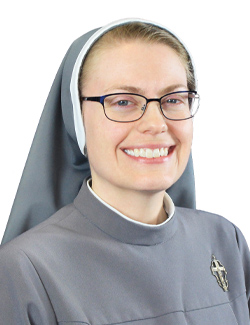
By Sr. Teresa Marie, C.K. and Sr. John Marion, C.K.
“Sister! Guess what!” “What, Joe?” “Did you know that pterodactyls are the largest flying animals and that the humans were 100th the size of a megalodon?”
“Sister! Guess, what!” “What, Joe?” Did you know that the Anchiornis huxleyi was a chicken-sized dinosaur?”
By Jeremy Ekeler Associate Director of Education Policy
My previous column in February, “Live from the Capitol, It’s School Choice,” was a real-time commentary from the hearing of LB753 (“Opportunity Scholarships”). In the weeks since, Tom Venzor has communicated brief updates on this bill as the session has plodded through an insufferable filibuster. Today, however, I present an in-depth look at history in the making as Opportunity Scholarships nears anticipated final passage.
What’s occurred? What’s about to happen? What’s next? Let’s dig into it!
The good news about Catholic schools is that we have something special going on here in the Diocese of Lincoln!
Emigrating from Iowa in 1986, and sending our first child off to kindergarten at St. Mary School in downtown Lincoln in 1993, my husband Mark and I knew we wanted for our children what we had growing up—a Catholic education that would nurture their faith, be rooted in and aware of the richness of the sacraments, and journey with Christ every day. We wanted prayer, the history of the saints, the celebration of Mass, and the presence of religious to be integrated into their educational routine.
by Rachael Tvrdy, Director of the Office of Family Life and Discipleship
Our parishes are families of families, an extension that offers support, fellowship, and stability to our lives. Recently I learned of a program called Faith Partners, an interfaith, evidence-based project with 30 years of experience, that offers a team approach to churches that are dealing with substance abuse, mental health, and addictions. I was able to attend a local training and was encouraged by the program’s desire to break stigmas to serve families who are hurting in isolation.
Last week, I introduced the four initiatives that we at Catholic Social Services of Southern Nebraska are fundraising for in lieu of Give to Lincoln, including the Lincoln Community Garden, the Lincoln Food Market, two recently purchased maternity and refugee transition homes, and our sustainability project, which includes launching our Gift & Thrift Online Shop.
by Fr. Ryan Kaup, Pastor, St. Benedict Church, Nebraska City Hispanic Ministry
In February 2008, as a scraggly 20-year-old, I anxiously boarded a plane to Valparaiso, Chile. I had just finished the first semester of my sophomore year at the University of Nebraska-Lincoln (UNL) and was heading to study abroad for the second semester.
At UNL, I was studying advertising and Spanish, and I signed up for the abroad program to satiate my thirst for adventure and improve my language skills. At the time, I had no idea how pivotal those six months would prove to be in my life.
By Victoria Fassett Campus Minister UNL Newman Center
Happy Easter! He is Risen! These past few weeks as we’ve been celebrating the Easter season, I’ve been drawn to the accounts of the early Christians from the Acts of the Apostles.
For much of my life, I’ve heard these stories and have thought of them as just that, stories. They easily become something that happened a long time ago or something that only happens to saints. But this Easter, I’ve been challenged to really consider what it would mean if the Holy Spirit wanted to work these miracles in my life and the lives of the people around me.
If you’ve had a kid in Catholic school, there is a very good chance you’ve filled out paperwork for the textbook loan program. Maybe you knew it, maybe you didn’t. And if you didn’t have a kid in Catholic school, you might be asking: what on earth is the textbook loan program?
Great question. Thanks for asking! Let’s answer it, because the textbook loan program (“TLP”) is on its way to having a makeover. Sen. Mike McDonnell of South Omaha (LD5) has introduced LB647, which would make critical updates to the TLP that will ultimately benefit parents of non-public school students.
It is the vision of Catholic Social Services of Southern Nebraska (CSS) to inspire hope and love in every encounter, and that includes serving every client who comes to us in need with dignity and respect. For nearly 100 years, CSS has been giving food to those in need, helping families with rent and utilities, welcoming refugees and immigrants, sheltering women and children fleeing domestic violence, and providing love and support to women in crisis pregnancies – and we will continue to do so.
Recently, I received an email from Robert, who took issue with my claim that Catholics do not believe that we can earn our way to Heaven by performing “good works.” Robert claims that Catholics do not know this, citing that he has talked to many Catholics who profess that they can earn their way to Heaven by performing good works.
The heresy of Pelagianism taught that one could merit or earn Heaven by a natural faith, without grace. It would be impossible for the Catholic Church to teach Pelagianism since the Church itself declared this a heresy in 418 A.D. at the Council of Carthage. The findings of the Council of Carthage are still available today, including Canon 113 which states that, “without the grace of God we can do no good thing.”
After Mass this past Sunday, a parishioner and I greeted each other and exchanged pleasantries. Following our exchange, he offered a humble request: “Father, can we please include praying for rain/moisture in the weekly Sunday petitions?”
To be honest, I was taken aback. Generally speaking, the desire to pray for rain primarily comes from rural parishes and farming/ranching communities. At the same time, I was thrilled to hear his request because it relates to exactly what I wanted to share in this month’s column: Praying for rain as a diocese and offering it as a daily intention.
Lincoln is a big small city. We are still a small town—we have small town values, small town culture, and some small town city planning that has made it feel like a very big city for those without a working vehicle.
“We shall not weary, we shall not rest, until every unborn child is protected in law and welcomed in life. We shall not weary, we shall not rest, until all the elderly who have run life’s course are protected against despair and abandonment, protected by the rule of law and the bonds of love. We shall not weary, we shall not rest, until every young woman is given the help she needs to recognize the problem of pregnancy as the gift of life. We shall not weary, we shall not rest, as we stand guard at the entrance gates and the exit gates of life, and at every step along the way of life, bearing witness in word and deed to the dignity of the human person—of every human person.”
by Fr. Brian Kane Rector, St. Gregory the Great Seminary; Director of Seminarians
This June will be the one-year anniversary of the hail storm that caused considerable damage at St. Gregory the Great seminary. We are grateful to so many friends who have helped us recover, both with gifts as well as with their time. The violence of the storm and the ongoing repairs have been a source of meditation for me this spring as we approach the end of the seminary’s academic year and prepare for graduation and ordinations to the diaconate and priesthood in May.
By Sr. Benedicta Hawkins, M.S. Marian Sisters of the Diocese of Lincoln
Everyone has a “go-to” bible passage, the one that, no matter what, stirs inside of you. A place where Jesus always shows up, always invites you deeper, always lets you experience His love.
For me, this passage is John 10: 10-18, which is always read in some length on the 4th Sunday of Easter, Good Shepherd Sunday. The day the church prays in a special way for vocations.
Family life comes with a lot of joys and special moments, especially this time of year. Graduations, vacations, first Communions, final days of school. These special moments create lasting memories and strong impressions.
Hastings Regional Director, Catholic Social Services of Southern Nebraska
Everyone is called to love. Everyone is called to give time, talent and treasure to benefit others. On May 4, Hastings is celebrating and encouraging this call to charity through its annual “Give Hastings Day,” a community event sponsored by the Hastings Community Foundation to encourage financial support of local nonprofits to enhance the quality of life in Adams County.
Before I dive into this week’s column, it’s one of those moments where I’m writing before an event takes place, but by the time you read this column the event will have already occurred. This time the event is second round debate on LB626, the Nebraska Heartbeat Act. Legislative debate on this life-saving legislation will have occurred on Thursday, April 27, shortly before this column hits your mailbox. Lord willing, we are another step closer to protecting preborn babies with heartbeats—and I will, of course, write more about this at a later date. Thank you to all those who joined Bishop Conley on Wednesday in making a special act of prayer or fasting for the advancement and passage of LB626. It is these acts of sacrificial love that “move mountains” and bring about the culture of life we desire for Nebraska.
“Fairy Tales of Hans Christian Andersen” by Hans Christian Andersen, compiled by Neil Philip, illustrated by Isabelle Brent Viking, N.Y., 1995, 140 pages, elementary school through adult.
Fairy tales are stories that instruct and entertain readers. In these stories, we meet kind and brave people, as well as evil beings such as witches and heartless individuals.
By Jeff Schinstock Director of Youth and Young Adult Ministry
Being a parent is not an easy task. My marriage has been greatly blessed by the gift of our beautiful children, but the responsibility of parenthood is a tall order. The Church recognizes this difficulty. Pope Saint John Paul II speaks about parents and their relationship with children 70 times in his famous exhortation Familiaris Consortio (“the fellowship of the family”).
In my own work, in particular the work of preparing families for the sacrament of Confirmation, I have found that parents need to be accompanied by the Catholic community. It is a great time to do a spiritual checkup. Like all relationships and friendships, our relationship with God needs to be tended. We need the accountability of a community, but also the encouragement of our neighbors. Did I mention that parenting can be hard?
A little factoid about me: I’m a night owl. I usually stay up until midnight or 1 a.m. It’s always been the time when I do my best work. The house is silent, the world is calm, and my phone is typically quiet. It’s a great time, if you ask me—and I’ll be happy to go toe-to-toe with any early birds out there who think otherwise.
There are things in life that we sometimes take for granted, like when we’re asked for our photo ID. Whether it’s when we are visiting a restricted, family-only room at the hospital, ordering a beer, or checking in for a flight, for most of us, without thinking much of it, we reach into our purse or wallet and pull out our ID.
Unfortunately, this isn’t always possible for some of our clients. Being homeless presents a number of obstacles. There are the obvious struggles of not always having a roof over your head at night or not knowing where breakfast, lunch, and dinner will come from. Being homeless, you weather the elements and the noise on the streets where you are sleeping, resting, or sitting.
By Fr. Denton Morris Pastor, St. Joseph Parish in Harvard Hispanic Ministry
Two beliefs of the Catholic faith combine in a special way in Antigua Guatemala (“Old Guatemala”) with the tomb of Santo Hermano Pedro: the belief in the communion of the saints, and the reality of the tomb. I thought of this practice upon reflection of the tomb of Christ this Easter.
In Guatemala, studying Spanish, I saw many visitors and pilgrims visit St. Francis Church and its ruins. Pilgrims especially came to visit the resting place of Santo Hermano Pedro. Some take the journey and make their petitions to him by knocking on his tomb. It is a testament to the knowledge of the communion of saints’ real intercession, as well as testament to the place of the tomb.
By Victoria Fassett Campus Minister UNL Newman Center
At dusk on Holy Saturday, 30 candidates and six catechumens gathered around the fire as Father Alec Sasse lit the Easter candle from the fire outside of the UNL Newman Center.
There is something so beautiful about this night of vigil when we await and then celebrate Jesus’ resurrection from the dead and the specific and real impact that has in our lives as Catholics. On a recent pilgrimage to Rome, I was reminded of the fact that when the earliest Christians committed their lives to Christ they knew that choice would likely cost them their lives. And yet, they saw something in the Gospel that made them believe that it was worth it. It was better to die a Christian than to live as a pagan.
We never know when disaster will strike. Watching the news it can seem like it’s one tragedy after another: earthquakes, floods, and fires. We see families whose possessions were destroyed, left behind, washed away, or gone up in flames. It’s impossible to replace family heirlooms, but it is also frustrating to be stranded without a clean pair of clothes and a pillow to rest your head on.
“Casey at the Bat: A Ballad of the Republic Sun in the Year 1889” by Ernest Lawrence Thayer, illustrated by Christopher Bing. Handprint Books, Brooklyn N.Y., 1888, (reprint, 2000) 32 pages, any age
“The Worlds of Tomie dePaola: The Art and Stories of the Legendary Artist and Author” by Barbara Ellerman, Simon and Shuster Books for Young Readers, N.Y., 2021, 202 pages, Grades 8-10.
On Saturday, Feb. 25, I had the privilege of concelebrating the lector/acolyte installation Mass along with Bishop James Conley and 13 of my brother priests at the Cathedral of the Risen Christ.
I have never known of a person making it through life without bearing a cross of some kind. The cross on the outside looks different for each of us. But on the inside, God never gives any one person more than he or she can bear – alone. Through the pain and suffering, God is with us, begging us to let Him in, to accompany us as we bear our crosses.