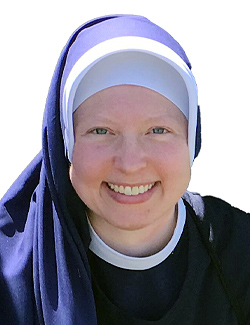
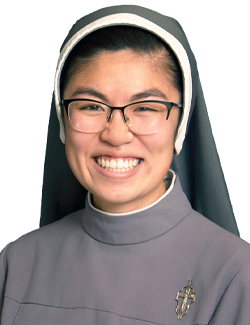
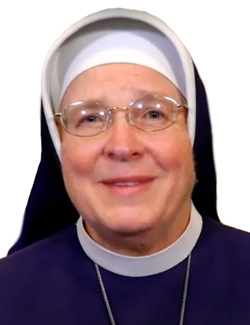
By Sister John Marion School Sisters of Christ the King
“What was it like?” It was after first Communion, and I had gathered my class on the floor and looked into their beaming faces as I asked the question, “What was it like to have Jesus inside you?”
By Rachael Tvrdy Director of Family Life and Discipleship
Not too long ago, it was a common understanding that families needed the support of other families to survive. In the days of the pioneers, homesteaders would travel in wagons with other families, knowing they couldn’t settle in the new world unless they had neighboring families to offer protection and help.
Why is it that now, in 2025, we think we are so far removed from our ancestors that we can “do it all” on our own? I venture to say it is the culprit of many factors, such as technology, a hyper-individualistic culture, and the constant mobilization of younger generations, to name a few.
Last week, my husband and I took turns driving our 3-year-old twin daughters – Keira and Saoirse – to Craoi na Tire Studio of Irish Dance in Omaha for a beginner’s summer dance camp.
Since March, the twins have been asking for Irish music to be played as they dance “jigs” and “reels” around the house, having seen the dancers perform at the annual St. Patrick’s Day parade and at the Hooley, an annual celebration of Irish culture organized by the Omaha chapter of Ladies Ancient Order of Hibernians. If Riverdance comes to mind as you read this, you’re not far off.
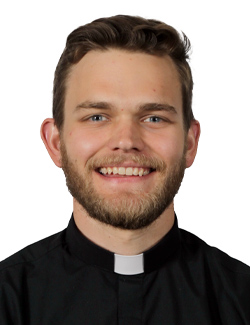
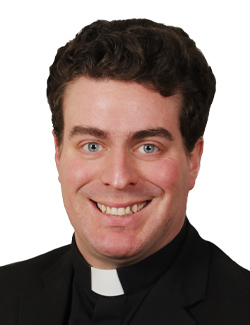
By Fr. Scott Nemec Assistant pastor, St. John the Apostle, Lincoln Hispanic Ministry
The home altar is set with flowers and candles, all the chairs in the house line the living room, and the kitchen is filled with the sweet aroma of Mexican food. It’s time to welcome the Blessed Virgin Mary and her pilgrims into the home!
In Hastings, each evening in the month of May, the month of the Blessed Virgin Mary, a family signed up to host the rosary and a meal at their home. The host families each night invited extended family members and friends from the Hispanic community, usually filling their homes with 10 or more guests. As everyone enters, they are welcomed with warmth and kindness: “es su casa.”
By Curt Feilmeier Principal, St. Peter School in Lincoln
In the heart of Lincoln, nestled within the vibrant and faith-filled parish of St. Peter Church, a remarkable milestone is being joyfully celebrated: the 35th anniversary of St. Peter School.
Since opening its doors in 1991 to students in kindergarten through the third grade, the school has grown into a beacon of Catholic education, academic excellence, and spiritual formation. This year, the entire community—students, faculty, alumni, parents, parishioners, and friends—is invited to come together in celebration of the school’s enduring mission and bright future.
When Francis Oleru boarded a plane in Nigeria with his pregnant wife and four children, he was stepping into the unknown. Without a prior visit, the medical laboratory scientist accepted a job at Chase County Community Hospital in Imperial, Neb. He knew America could offer his children the safety, security and opportunity that Nigeria couldn’t, and so with faith that God would provide, he and his family set off on their new adventure in rural southwest Nebraska.
On June 2, the Nebraska Unicameral adjourned sine die (a fancy Latin term meaning “without a day”). This means the 109th Nebraska Legislature, First Session, is completed. State senators won’t convene together as a body until January 2026 (unless a special session is called).
First of all, I want to thank those of you who participated in last month’s Novena to St. Isidore the Farmer (May 15) and have been continuing to pray for safe, seasonal, and sufficient rainfall. Although there is still a lot of ground to make up concerning the statewide drought (and some events of storm damage), God has nevertheless blessed us with the grace of recent moisture across many parts of the state. I am confident this is due, in part, to your concerted efforts of prayer and sacrifice. As such, God, through the intercession of St. Isidore, has generously provided for our needs and will continue to do so.
By Marion Miner, Associate Director of Pro-Life & Family Policy
In last week’s column, we spent some time on LB89, the “Stand With Women Act.” This week, we return to some of the foundational themes touched on in that column and explore them in a little further detail.
Wisdom for the next generation of men who strive to follow Christ, the Priest and Servant
by Fr. Brian Kane Rector, St. Gregory the Great Seminary; Director of Seminarians
“I beg you, I beg you, I beg you, be a man of prayer.”
Msgr. Thomas Wells looked over at me and said these words during the homily at my first Mass of Thanksgiving at St. Peter Parish in Lincoln 25 years ago this week.
Because the poor were fed, clothed and sheltered at a personal sacrifice, the pagans used to say about the Christians, “See how they love each other.”
In our own day the poor are no longer fed, clothed, sheltered at a personal sacrifice, but at the expense of the taxpayers.
And because the poor are no longer fed, clothed and sheltered, the pagans say about the Christians “See how they pass the buck.”
These striking words from Peter Maurin, co-founder of the Catholic Worker Movement, are just as relevant today as when he first spoke them nearly a century ago.
By Sr. Joy Le, Marian Sisters of the Diocese of Lincoln
As summer is approaching, families are planning where to go for summer vacation. Disneyland. Mount Rushmore. The Grand Canyon. My family never had to plan, because we went to the same place every year: Marian Days, in Carthage, Mo.
Marian Days is hosted by the Congregation of the Mother of the Redeemer, a Vietnamese male community who came to America after the Fall of Saigon in 1975. The church in Springfield-Cape Girardeau sponsored 178 priests and brothers who came as “boat people.” They were able to rent the vacant Oblates of Mary Immaculate Seminary for $1. The pastors from Immaculate Heart of Mary Parish in Lincoln come from this religious community. Thousands of Vietnamese come annually to their campus as a Marian pilgrimage. Marian Days started as a way to ask Mary for peace for the Vietnam War. Now, it’s a place of prayer and reunion.
Ever since I can remember, the first weekend of August, my family would drive five hours to Carthage. As a kid, I hated it. We slept in tents. With more than 50,000 people in one place, I would often get lost. I would sweat through my clothes. The lines to the shower seemed like they never got shorter. My phone never had service. Plus, Mass was always two hours long.
By Marion Miner, Associate Director of Pro-Life & Family Policy
The Catholic Conference advocates for and against many bills every session in the Nebraska Legislature. Whether legislation is good or bad always depends, in large part, on the answers to questions about the human person. Who is the human person, and what does he need to flourish individually, in the family, and in community? Is the proposed legislation conducive to human flourishing, or does it damage our ability to live well together in truth, justice, and peace?
Last week, senators debated and ultimately advanced—in amended form—LB89, the “Stand With Women Act.” This bill touches on some of these foundational questions.
Springtime is often associated with new life and fresh beginnings. After a long, cold winter, nature reawakens—birds chirp, flowers bloom, and the grass turns green. In my backyard, for example, near our Marian statue, our rose bushes, which struggled last year, are beginning to show signs of hope.
Just like those rose bushes, there are many people in our community who are given the chance to grow and rebuild, no matter how difficult their past has been. One such person is Jacob, a young man who, after more than a decade in federal prison, is navigating his own journey of transformation with the help of Catholic Social Services and RISE.
When Cardinal Dominique Mamberti walked out onto the balcony of St. Peter’s Basilica, very few people would have guessed he was about to announce the election of the first U.S.-born pope to the See of Saint Peter. But that is precisely what we received, and what a joy it has been to watch these early days of the papacy of Pope Leo. The election, though, raises the question: who is this man the College of Cardinals elevated to Christ’s vicar on earth?
While we have much to learn about Pope Leo, I wanted to reflect on a few things in these early stages of his papacy that shed light on the work we do at the NCC to bear the light of Christ in the public square.
By Fr. Christopher Stoley Sacred Heart Church, Crete Hispanic Ministry
I’ve read a few different studies that have made two claims: first, that when an English speaker is learning a new language, his or her voice will get higher when speaking that language, and that a non-English speaker learning English will have the opposite effect (his voice will get lower speaking English); and second, that when one learns a new language his personality will change, based on what language one is speaking.
On Mother’s Day, we often picture flowers, breakfast in bed, handwritten cards, and perfectly behaved children. But for one mother in our community, the day begins—like most days—with quiet sacrifice and deep faith.
Maria, like many immigrant mothers, balances her own dreams with her children’s needs. Before the day starts and while her children are still asleep, Maria sits with her coffee at the kitchen table and opens her U.S. Citizenship workbook. It’s been more than 10 years since she and her children made the dangerous journey to the United States. Two of the children are too young to remember the trip, but Maria remembers it all—the fear, the uncertainty, and the early years of hardship.
State senators have been going hard with all-day debate for more than a month, and they have about a month of sustained effort remaining. Just last week, senators were debating bills on cutting the inheritance tax, limiting increases to the state minimum wage, banning certain types of cannibinoids, and clarifying how “good time” sentencing is calculated for those serving in city or county jails, among many other issues. But this week, the Nebraska Legislature has been tackling the statewide biennial budget.
Though busy to the point of exhaustion, May is an exciting month in our diocese. As farmers continue to labor by the sweat of their brow, planting new crops this spring while also mitigating weeds in the field; and cattle farmers continue to provide ongoing health/profit checks for their cow/calf operations and work on pasture management; so too the academic school year and graduations are right around the corner.
In my time as social media coordinator for the Diocese of Lincoln, I have had the opportunity to help grow our online presence in many different ways. The diocese is on Facebook, Instagram, and YouTube, and the growth we have seen on these platforms tells us what we already knew: this is where people are!
With great sorrow, we continue to mourn the loss of the late Holy Father, Pope Francis. We commend his soul to the Father of Mercies, who Pope Francis so often invoked and invited us into His love.
by Fr. Brian Kane Rector, St. Gregory the Great Seminary; Director of Seminarians
For many years, we have ordained new deacons and priests on Memorial Day weekend in the Diocese of Lincoln. We will do that again this May, ordaining two deacons May 23 and two priests May 24 at the Cathedral of the Risen Christ in Lincoln. That tradition will shift next year as the Church implements the last part of the Vatican document guiding the formation of priests: Ratio Fundamentalis Institutionis Sacerdotalis (Ratio) or The Gift of the Priestly Vocation.
The fundamental goal of the document is to help young men be well-prepared to enter the priesthood. The addition of the Propaedeutic Stage at the beginning of formation will be book-ended with the Vocational Synthesis Stage at the end of seminary formation.
By Sr. Regina Marie, C.K. School Sisters of Christ the King
After a long Lenten journey, the beautiful, grace-filled season of Easter is finally here! I know I need Lent so that I may know with greater clarity the places in my life where I have come to depend more upon myself and less upon Jesus, but I am always grateful when the “alleluias,” flowers and celebrations return!
As we begin these 50 days of Easter joy, I find myself asking, “How do I reconcile the real presence of the cross in my life and in the lives of those I love with this time of rejoicing?” Even during these Octave days, I have a friend who is struggling with ongoing health issues that seem to be beyond her control, a Sister in my community is gathering with her family to bury her last grandparent, the universal Church is mourning the loss of Pope Francis, and I myself am dealing with chronic pain that seems like it will never be resolved. Where are the Easter celebrations in all this suffering?
By Miranda Schumacher Development Officer at CSS Hastings
Our vision at Catholic Social Services is to inspire hope and love in every encounter. We’re here to help our neighbors, like Annette, who come to us in their most challenging times yet are so grateful for the assistance they receive. We’re here thanks to many of you, our partners in hope, because of your past support through Give Hastings Day.
The Nebraska Legislature is over two-thirds of the way done with session. If this were an even-numbered year (or short-session year), the Legislature would be adjourned by now—and my feet would be kicked up. But, working days remain in this “long” (odd-numbered year) session.
While it would seem the Unicameral is on the “downhill” in terms of the number of days left, they are otherwise climbing uphill with the enormous amount of work ahead of them. State senators must still put together and approve a statewide biennial budget, debate dozens of key priority bills, and pass a few laws throughout that time—just to name a few things left on their agenda.
By Fr. Dominic Winter Hispanic Ministry Assistant Pastor, Cristo Rey in Lincoln
At the Nebraska Walk for Life, most of the Hispanic Catholics gathered on the east side of the rally, listening as best they could to the English-speaking politicians and activists. I was so proud of their presence there, with their lovely Guadalupe banners flying and their strong devotion visible to everyone there. They, too, were visibly encouraged by my presence as well, both as a priest and as a translator.
By Levi Baus, Volunteer Coordinator in Lincoln, CSSS
For I was hungry and you gave me food, I was thirsty and you gave me drink, I was a stranger and you welcomed me, I was naked and you clothed me, I was sick and you visited me, I was in prison and you came to me…Truly, I say to you, as you did not do it to one of the least of these, you did not do it to me. — Matthew 25: 35-36, 45
If I spend all week praying, sacrificing, reading Scripture, and stuff like that, will I get more out of Mass? Yes. But there is more to it.
Well-known podcaster Father Mike Schmitz has a talk about “not getting anything out of the Mass.” There is a very short version on Ascension Press, and he will sometimes give a longer talk at conferences. I heard the longer version last year at Steubenville of the Rockies.
By Hope Weninger Accounting & HR Manager, Catholic Social Services of Southern Nebraska
Chances are you are a caregiver. Maybe you are a mom or dad raising your children; a daughter or son aiding your aging parents; or caring for others in your chosen profession or vocation.
Just as you are told in the preflight check, put your own oxygen mask on before assisting others. Conceptually, most of us know that, in order to effectively help others, we must take care of ourselves first. But do we?
As we enter the final third of the legislative session—always its fastest and most volatile time—I want to introduce readers to three important bills this year that address the human dignity of unborn children and their mothers. There are others deserving mention, but we’ll focus today on LB632, LB512, and LB669.
It was springtime, and the rain was pouring down. I had just met with one of my first clients in my new position at Catholic Social Services in 2019. Let’s call her “Casey.” She and her friend “Naomi” had been badly beaten by their boyfriends the night before. They seemed to be each other’s only support, both fleeing from domestic violence.
Nearly 20 years ago, in a Gallup poll of Catholics in Chicago, 48% of men answered that “Mass is boring” and 55% said they “don’t get anything out of the Mass.”
By John Haag Lincoln Warehouse Manager, Catholic Social Services of Southern Nebraska
Catholic Social Services of Southern Nebraska (CSS) has been, and hopes to continue to be, blessed with very generous donations across 24,000 square miles of southern Nebraska. One of the most-asked questions is, “What happens to the items I donate?” Well, dear readers, that is an excellent question! So together let’s tackle that question and more, and hopefully gain a better understanding of CSS’s role in showing dignity to all we encounter while providing “Hope in the Good Life.”
By Sr. Faustina Lightfoot, M.S. Marian Sisters, Diocese of Lincoln
“Whatever you did for the least of my brethren, you did it unto Me.” (Mt 25:40)
The first time I remember encountering Jesus in another suffering person was at the Veterans Affairs Hospital in Omaha when I was in pharmacy school, prior to entering religious life. I was a pharmacy intern and one of my responsibilities was to provide discharge education for patients. I went to provide medication education to a patient, like I had with every other patient, and as he shared his story, my heart was moved with compassion for him in a different way. As I walked away from his room it was like the Holy Spirit hit me seemingly “out of nowhere” with the awareness that I had just encountered Jesus Christ in this patient. In that encounter, my heart was changed and convicted of why God called me to serve in healthcare. The gift of studying medicine was simply an avenue our Lord was using to lead me to encounter His suffering and pierced Sacred Heart.
As I write this column during this blustery March blizzard, my mind is eagerly jumping ahead toward spring and the start of the planting season and pre-emerge weed management. Although planting season is still some time off, it will be here before we know it.
Similarly, as we continue to progress through yet another Lenten season in the desert, while it may seem far away, the fruit-filled Easter season will arrive sooner rather than later. It is best, therefore, that we patiently stay the course and, in virtuous living, prepare in mind, body, and spirit. Whether we realize it or not, the planting season offers us insights that aid our Lenten journey.
Register for Catholics at the Capitol The deadline to register for our annual legislative advocacy day, Catholics at the Capitol, is April 2. You know what that means: register NOW!
By Jon Borer K-12 Principal, Lourdes Central Catholic School, Nebraska City
In the wake of winter state competitions, I am reminded of many inspiring movies and books of my childhood and adult life. Stories about comebacks, underdogs, and beating the odds. Stories like “Cinderella Man,” in which James “Bulldog” Braddock goes from working on the docks during the Great Depression to the boxing heavyweight champion of the world. Or the story of the 1980 U.S. men’s hockey team facing off against the juggernauts from the Soviet Union and taking home the gold medal. Finally, there is the underdog story all other such stories are compared to: David v. Goliath. The undersized kid from the fields armed with a couple pebbles and a slingshot vs. the literal Philistine giant, protected with a full body of armor and armed with weapons of mass destruction.
Before I jump into my column, I want to invite/urge you to register for Catholics at the Capitol. This is our annual legislative advocacy day for Catholics across the state. It gives you a chance to hear from elected officials, including the governor, about important legislative issues, and advocate with your state senator. The event is Wednesday, April 9, and you can register at www.NEcatholic.org. Remember, as State Auditor Mike Foley says when it comes to the Nebraska Legislature: “Those who show up, win!”
The Nebraska Legislature introduced 715 legislative bills this session. Over the course of the last two months, nearly all those bills have received their required committee hearing, giving Nebraskans an opportunity to give these bills a “thumbs up” or “thumbs down.” Public hearings do quite a bit to “thin out the herd” of viable legislative bills. But nothing “thins out the herd” like priority bill designations.
Every refugee has a story to tell about his or her journey. To be sure, the journey of a refugee is not an easy one. Refugees flee their country because of persecution, war, or violence. Unable to return to their homeland, they seek refuge in another nearby country.
Life in refugee camps is difficult, though, and most refugees do not have opportunities to thrive in such conditions. This is why, when given the opportunity, refugees choose to be resettled in a third country, like the United States, in order to find a safe and stable place that they can call home.
By Mario Racicot Director of E-commerce Catholic Social Services of Southern Nebraska
Last spring, a wonderful donor dropped off several boxes of china, sterling silver, and antiques. She had been clearing out her basement and wanted to pass on the items to Catholic Social Services, to sell on eBay. A few months later, we sold her sterling silver for a little over $2,000. I reached out to share the news and she sent me this response:
During the legislative session, I am adamant about providing legislative bill updates. It’s rare I would “interrupt your regularly scheduled programming” to write about a non-legislative topic, but here we go.
While it seems like November 2024 was just yesterday, any number of people are already gearing up for November 2026, including a recently launched ballot initiative addressing the topic of abortion entitled “Choose Life Now” (for short, CLN).
CLN would provide protection in the state constitution for unborn children from the moment of conception. (As you’ll recall, to get on the ballot, an initiative needs 125,000 signatures from across the state. And, if placed on the ballot, it needs majority support of voters to be adopted into the state constitution.)
If this CLN ballot initiative sounds familiar, it’s because there was a failed attempt last election cycle to obtain the signatures needed to be on the ballot.
Like last time, the bishops do not support this most recent CLN constitutional amendment proposal.
You might be asking: why would the bishops not support a constitutional measure seeking to protect unborn life from the moment of conception? That’s a good question, and here’s why.
By Deacon Matthew Hecker, Ph.D. Communications St. Joseph Parish, Lincoln
If you are reading this, you are a consumer of Catholic media.
Why does the Church bother herself with the business of media and communications? Isn’t that more properly a secular function? Especially in the internet and smartphone age, don’t we already have an excessive amount of news and information? We do, but frankly, it’s all the more reason why the Church needs to be present and active in this arena.
By Jeff Schinstock Director of Evangelization and Catechesis
Catholics are good at reminding ourselves of things. When we enter church and dip our finger into the holy water and make the sign of the cross, it is a reminder of our baptism. That baptism unites us to God as sons and daughters, letting us know just who we are and how we are loved. Jesus introduced us to baptism by allowing John to baptize him. At this moment, the heavens proclaimed that “This is my beloved son, with whom I am well pleased.” (Mt. 3:17).
By Fr. Rafael Rodriguez Pastor, Cristo Rey Parish in Lincoln
I entered St. Gregory the Great Seminary in 2001. As part of my seminarian formation, I was introduced to many exciting classes and activities. Among those, I remember a meeting with the Knights of Columbus (K of C). I had never heard of them before.
by Fr. Brian Kane Rector, St. Gregory the Great Seminary; Director of Seminarians
One of the blessings at St. Gregory the Great Seminary is the opportunity to form seminarians from partner dioceses and archdioceses in the area and across the country. Not every diocese has its own seminary. Currently we have men from the dioceses of Fargo, Kansas City-St. Joseph, Colorado Springs, Pueblo, and Santa Rosa.
We are excited to announce that starting this fall we will begin a partnership with the Archdiocese of Omaha. It will be a chance for our future priests to build relationships while in the seminary that will last throughout their priesthood. It will also help the Catholic Church in Nebraska to share the Gospel and work together to serve the people of our state.
Growing up, I hated the smell of potpourri. Sometimes my grandma would have it in her house, or I’d sometimes smell it in a certain aisle in Walgreen’s. I still hate the smell. Despite my aversion for the aroma, I like to use the word “potpourri” when I’m providing an update on a mixture of legislative topics—the word fits well. So, let’s dig in.
Our upcoming Celebration of Hope gala and silent auction on Saturday, March 15, promises an evening of inspiration, fellowship, and a chance to make a tangible difference in the lives of those in need across southern Nebraska. This year, our event will take on a new dimension with our silent auction, offering attendees the opportunity to bid on an array of memorable experiences and valuable items.
By Elli Wyllie, Marketing Associate, Catholic Social Services of Southern Nebraska
“For I was hungry and you gave me food, I was thirsty and you gave me something to drink, I was a stranger and you welcomed me, I was naked and you gave me clothing, I was sick and you took care of me, I was in prison and you visited me.” Matthew 25:35-36.
When we hear these words, we often think of the great saints—Mother Teresa of Calcutta, St. Francis of Assisi, and St. Damien of Molokai; individuals who embraced this call in radical ways, serving the poorest of the poor in India, selling every possession they had, caring for lepers. Their stories are inspiring, yet they can sometimes lead us to wonder: Well, what can I do? Most of us are not in a position to drop everything. We have families, jobs, and responsibilities that are noble and good. The stories of great saints can sometimes feel overwhelming. But the reality is that most often, answering God’s call doesn’t require drastic measures. It simply requires a “yes,” and a willingness to try.
February has been a month of extremes. From the frigid cold and the first measurable snow in over a year for some, to a heat wave drawing us toward spring, we have seen a lot. For those who work with livestock, my prayers have been with you: “Frost and chill, bless the Lord; Fire and heat, bless the Lord.”
By Sr. Mary Michael School Sisters of Christ the King St. Teresa School in Lincoln
So there we were in the seventh-grade classroom where I began with a couple of simple questions: “If you were outside for a significant length of time, what could you study?”
The volunteer recorded answers on the board: plants, animals, trees, insects, weather, habitats… and others I don’t recall.
“And if you were out overnight, what could you add?” Stars, constellations, planets, astronomy, the moon, the lunar cycle were among their answers.
Then, intentionally causing considerable confusion, I said: “Sounds great, let’s do it!”
There is a growing—and negative—trend to view health care professionals as nothing more than vending machines.
You walk up to them, swipe your insurance card, punch a few buttons, with the expectation they’ll dispense the service you demand. And when they won’t dispense what you like, you shake the machine, hoping to manipulate the service out of the coils and into the drop box.
Why do I say this?
Our culture finds itself at a crossroads regarding the dignity of the human person and the priority of conscience.
I think I was 11 years old. It was a warm summer day. The grass was a beautiful green, and there were just a few clouds in the sky. One of my older brothers and a good friend of his, Mike, were getting tired of me wanting to run around with them. I couldn’t blame them.
The only way to stop me from doing so was to secure me to the ground, spread eagle in the green grass with my face to that summer sky. Plastic orange tent stakes were buried in the ground and from them, ropes tied to my wrists and ankles.
If memory serves, I didn’t put up that much of a fight. After a time of looking up at the sun and the trees from that precarious position on the grass that nice summer day, it was getting uncomfortable. And there was no way for me to free myself from these strongholds. I was now alone. The only hope I had of being freed was that someone would set me free. It was not possible for me to free myself. Even though it was uncomfortable, I had a sure and certain hope that someone would save me from the bondage, eventually!
by Veronica Pino St. Gianna Program Manager Catholic Social Services of Southern Nebraska
Oftentimes at St. Gianna Women’s Home, we work with a family for a year—sometimes even longer—and when they complete the program, we don’t hear from them.
Although we are always thankful when they have undergone a successful transition to their next step outside of St. Gianna’s, it can be difficult to have those relationships disappear. We always encourage them to keep in touch—to continue to share their struggles and their joys with us. However, trying to keep up with work, kids, school, and all the other activities of a family that is taking steps forward usually leaves little time for extra phone calls or visits.
Every now and then, though, we hear from a family who wants to share a little about their current life after St. Gianna’s. Sometimes this happens a few months after graduating from the program; other times, years pass before someone reaches out. But it’s always a special moment to hear stories or see pictures of growing kids as they share their continued achievements.
By Addison DeFreece Coordinator of Religious Education St Michael Parish, Lincoln
One day, I encountered a man who complimented my shirt that read, “The light shines in the darkness. John 1:5.”
I continued the conversation and learned more about his story and background in Christianity. He grew up in a Christian family and continues to attend church because it’s what he knows, but he didn’t seem convinced of why he is Christian. He then asked if I grew up Christian, and I responded, “Yes, I’m actually Catholic and grew up going to a Catholic school.”
He continued by asking, “Would you be Catholic now if you didn’t grow up in a Catholic family or go to a Catholic school?”
Before I jump into the meat and potatoes of this column, the time is upon us: register NOW for Catholics at the Capitol, our annual legislative advocacy day at the Nebraska Legislature.
It’s on Wednesday, April 9. We’ve got a lot in store. You’ll learn from elected officials and NCC staff about key pro-life, school choice, human sexuality, immigration, anti-poverty, and social media regulation bills. You’ll then take that knowledge and advocate with your state senator, and get a chance to watch the Nebraska Legislature at work. To top it off, you’ll be joined by 250 of your closest Catholic advocacy friends from across the state. It’ll be great. Register at www.NEcatholic.org – and act now while seats are still available.
Around 9:05 p.m. every Sunday night, the procession begins. No, not a Eucharistic procession down the aisle of the nave, but a procession of spiritually hungry college students walking down Greek Row after a weekend where many different forces – some holy and some sinister – fought for their attention.
By April Boellstorff Regional Director in Auburn, Catholic Social Services of Southern Nebraska
How do you explain a job that fills your heart to overflowing? When people ask what I do, words often fail me. How does one properly verbalize love? At Catholic Social Services, every day brings new reminders of what love is. It’s more than just a feeling—it’s action, compassion, and connection.
As St. Augustine said: “What does love look like? It has hands to help others. It has feet to hasten to the poor and needy. It has eyes to see misery and want. It has ears to hear the sighs and sorrows of men. That is what love looks like.”
For the last several years now, Catholics at the Capitol has boasted a sell-out crowd, so let’s keep it going (watch out Memorial Stadium, here we come)! Visit www.NEcatholic.org to register now, as seats are limited.
But, Tom, you’re getting ahead of yourself. What is Catholics at the Capitol? And why should I attend?
By Rachael Tvrdy Director of Family Life and Discipleship
Broken families lead to broken parishes. It is no shock to hear this statement, but we rarely look at it because it is an unpleasant reality to face. Our parishes are composed of families, and for better or for worse, families are full of dysfunction. We are all humans, and there is no perfect family (unless it’s Joseph, Mary, and Jesus).
In my last two columns (Jan. 17 and 24), I undertook a comparison of two differing approaches to solving the current “man crisis” in our culture. I compared the secular (Godless) perspective to the Catholic Christian perspective.
If the conclusion is to redefine masculinity into a “new masculinity,” all you will get is something which is not masculinity. If you doubt this, all you need to do is consider how femininity was redefined by radical feminists in the 1960s and 1970s. Betty Friedan and other radical feminists made a lot of promises and predictions back then, but none of them has come true. What promises await men if we redefine masculinity today? Will men become happier, more confident, healthier?
By Fr. Lothar Gilde Pastor of St. Patrick Parish in Imperial, Hispanic Ministry
Celebrations that involve the Blessed Virgin Mary grace numerous days of the liturgical year. Recently, we saw even the Sunday liturgy dedicated to Candlemas which is also known as the Presentation of the Child Jesus in the Temple. Catholics reflect on this moment every time they pray the second Joyful Mystery of the rosary. In this encounter with the Holy Family, the virtue of obedience is overflowing, since they were brought to that moment due to their obedience to the Mosaic Law.
If you have never attended Catholic Social Services’ Celebration of Hope banquet, I urge you to join us this year. With the primary goal of sharing our mission and celebrating the impact our donors have made this past year, we are adding several new elements to the evening of Saturday, March 15.
The Nebraska Legislature has completed roughly 20 days of the 90-day legislative session. Public hearings on legislation have been underway for a solid two weeks, with over a month and a half remaining. Fairly simple, straightforward bills with broad support are already being debated and advanced through legislative floor debate.
At the same time, the different associations and groups that have an advocacy presence at the Capitol have been meeting with their membership and boards to evaluate bills they will support and oppose.
The same is true for us at the Nebraska Catholic Conference.
Did you know that for the first time, Nebraska taxpayers can make a more significant impact while benefiting from the Nebraska Pregnancy Help Act? The Act offers a nonrefundable tax credit for cash contributions to approved pregnancy help organizations, including Catholic Social Services of Southern Nebraska (CSS).
Committee hearings on legislative bills are off and running, now that the bill introduction period is completed. There were 715 legislative bills and 15 constitutional amendment proposals introduced during the 10-day bill introduction period, and now every one of these proposals will receive a public hearing.
One of my grandfather’s best friends was a self-described “old newspaper man.” Allen worked for his father, the owner of a small-town Iowa newspaper, even before getting his degree in journalism in 1928. He became owner and publisher of the paper less than 10 years later, when his parents and sister were killed in a car crash. He made running that newspaper his life’s work.
Allen retired from the paper the year I was born, but he continued writing a weekly column – and a book – and he continued celebrating the stories and the connections he’d built over more than four decades gathering news. For him, journalism was a way of life, a way to share the stories of the community he loved with everyone he met.
By Amy Reisen Coordinator of Youth Evangelization and Discipleship
Behind every transformative moment in a young person’s faith journey is a quiet hero who listens, guides, and walks alongside him or her.
Far more than coordinators of liturgies or bible study leaders, these “heroes” are the beating heart of spiritual growth within our schools. But what does it take to dedicate one’s life to such a mission? The answer lies in a tapestry of faith, sacrifice, and a deep commitment to walking with Christ and guiding young people through life’s peaks and valleys. In the Diocese of Lincoln, we are fortunate enough to have a fairly typical title for these “heroes.” That title? Campus ministers.
Last November, school choice—which is all about making sure parents are empowered with the ability to choose an education that is best for their child—took a loss at the ballot box. After spending more than $7 million, the state and national teachers unions were able to wipe off the law books a program that helped low- and middle-income families with financial assistance to afford tuition at a non-public school of their choice. It was a tough loss for us at the Nebraska Catholic Conference, but it was a devastating loss for the 4,500 students who were being served by these education scholarships.
By Jan Schultz Volunteer, St. Isidore’s Gift & Thrift
St. Isidore’s Gift & Thrift, an outreach of Catholic Social Services of Southern Nebraska, is about to celebrate its 15th year of existence. The anniversary arrives in March 2025.
Starting in a small building that formerly served as the fellowship hall of St. Patrick Church in Imperial, two and a half blocks north of its current location on main street, the store continues to thrive, serving residents of Imperial and surrounding communities with an array of household goods, furniture, clothing and more.
In the opinion piece I mentioned in Part 1 of this column Jan 17, Christine Emba wrote: “In my ideal, the mainstream could embrace a model that acknowledges male particularity and difference but doesn’t denigrate women to do so.”
Hispanic Ministry Pastor, St. John in Minden and Holy Family in Heartwell
Right now, many of our Hispanic friends, neighbors, and relatives are afraid. I’m afraid, too. We don’t know if someone we love is going to be deported soon.
Many would love some mercy. Who wouldn’t? But the solutions aren’t as simple as we would like. Justice is not easy. I don’t have a great answer to any of the big questions surrounding immigration. Maybe you do. But before you assume you know everything, consider the following.
Several years ago, Matthew James Christoff made a splash in the “Catholic world” by writing and talking about the Catholic Man Crisis. He arrived at his conclusion by observing men, conducting surveys and looking at national statistics. In the process, he identified things most people already knew or suspected, but he also identified deeper concerns. The deeper concerns were typically related to men and the experiences faithful Catholic men had on a day-to-day basis, within the faith and in the culture at large.
Eleven years ago, when I worked at Catholic Social Services of Southern Nebraska (CSS) as a refugee case manager, I welcomed a family from Sudan. Like many of our clients, they fled terrible circumstances in their home country, including conflict, persecution and the risk of famine. Yet they also had heavy hearts, having left behind family, friends and all that was familiar.
Forty-nine senators are gathered in Lincoln for 90 days of the legislative session, which will take us into early June. Sixteen of these senators are brand new. Another 12 senators have been involved in only two full legislative sessions. In short, more than half of the members have less than three years of experience in the Unicameral. That said, all the senators bring plenty of experience and energy to the table.
First and foremost, I want to wish you all a merry Christmas and happy New Year!
One particular blessing during the Christmas season is being able to view all of the various nativity sets in our homes, parishes, and schools. Ever since I can remember, I have always been fascinated by nativity sets and their innate beauty.
By John McDermott Vice President, Marketing & Development Catholic Social Services of Southern Nebraska
Around this time each year, it’s natural for us to look back and feel grateful for God’s countless blessings. For me, during the Christmas season and at the start of a new year, I thank God for all that He has done for me over the past year – not just in my personal life, but in my work life. I’m blessed to work at Catholic Social Services and am so thankful for my co-workers, our volunteers, and those who support our mission through prayers and with material and monetary donations. I’m also blessed to have the opportunity from time to time to see how grateful those who come to CSS for assistance are for any help we can provide.
By Elaine Simpson Child Care Director Catholic Social Services
“Jesus our brother, kind and good was humbly born in a stable rude....” - from “The Friendly Beasts,” a song by Robert Davis
As we move into the last Sunday of Advent and prepare to celebrate Christmas, let’s pause and remember that this Baby who was born in a humble stable more than 2,000 years ago is the real reason for celebrating. This kind and good Brother who came to earth to be our Savior is really who brings us joy and salvation!
In his most recent column, Tom Venzor wrote a few reflections on the 2024 Bishops’ Pro-Life Banquet. The enthusiasm and sense of joy we could all feel that evening, less than a month after we defeated an existential threat to Nebraska’s future, was greater than at any pro-life celebration at which I have been. Not even events held in the immediate aftermath of the fall of Roe compare. It was a great occasion for gratitude and a joy to celebrate with you!
By Sr. Mary Ruth School Sisters of Christ the King
Dearest Humankind,
“Glory to God in the highest, and peace to His people on earth!” (Lk 2:14).
As the angels sang in jubilation on that holy night in Bethlehem, we once again extend Christmas greetings as you prepare to celebrate the birth of the Son of God as one of you. I, Gabriel, have been chosen to narrate this year’s angelic Christmas letter and to give you a closer view of three important scenes in which I played a part.
By the time you read this, my time at the Nebraska Catholic Conference (NCC) will have come to a close. In these final days as communications and outreach specialist, I’m reflecting on what feels like a lifetime of accomplishments, losses, and lessons learned.
Advent is upon us, and God is inviting us to enter into spiritual preparation; a time of reflection and anticipation as we await the birth of Christ. Advent is a season of waiting, a sacred time of preparing our hearts and minds for the coming of the fulfillment of all of God’s promises to us.
One way we can approach Advent is by reflecting on the four virtues that guide us during this season: hope, peace, joy, and love. These virtues are the essence of Advent; they also help us live with the liturgical season.
As the holiday season approaches and twinkling lights and Christmas wreaths adorn streetscapes across Southern Nebraska, a unifying theme of the Christ-child shines through the windows of our Gift & Thrift stores.
What is Advent to you? If you are anything like me, most Advents of late have been a little different than previous Advents. As I get older, more attentive to the Church’s readings and the priests’ homilies as Advent approaches, I have a much different thought process than I did 10, 20, and 30 years ago.
“O God, who wonderfully created the dignity of human nature and still more wonderfully restored it, grant, we pray, that we may share in the divinity of Christ, who humbled himself to share in our humanity.” — Collect for Mass during the Day, the Solemnity of Christmas
By Fr. Rafael Rodriguez Pastor, Cristo Rey Parish in Lincoln
Amazing activities happened at Cristo Rey Parish during the month of November. Cristo Rey serves the spiritual and cultural needs of Spanish-speaking Catholics who live in the City of Lincoln and surrounding area. The current church was dedicated in 2003 and is located at the heart of Lincoln, near 42nd and J streets.
Dear Readers: The years just seem to be flying by. I hope you have enjoyed the book talks for 2024. As well, I am pleased to have given you some valuable titles for your children and family. The famous English writer, Walter de la Mare said: “Only the rarest kind of the best can be good enough for the young.” I hope that my choices have assisted you in choosing beautiful, wholesome literature for your children. Merry Christmas.
Before I jump into the subject of my column title, I want to say a huge “thank you” to all those who attended and supported the Bishops’ Pro-Life Banquet. It was an incredible event, with so many amazing pro-life friends from across the state. It was a worthy celebration of the amazing work the Lord did for us in Nebraska with the defeat of Initiative 439 and the passage of Initiative 434. The praises of countless pro-life advocates, heroes, and heroines were sung. Fun was had by all, and I pray to God that we will continue to celebrate this important victory as we also continue to meet the needs of mothers and babies in need across our state, as we work toward a greater culture of life and civilization of love.
by Fr. Brian Kane Rector, St. Gregory the Great Seminary; Director of Seminarians
Thanksgiving season has taken on a deeper significance since beginning my assignment at St. Gregory the Great Seminary in Seward. Each day as I open the mail, I am overwhelmed with the generosity of so many people who support the young men discerning a call to be our next parish priests.
The proverbial “middle child” of this year’s election was the school choice repeal, Referendum 435. Stuck in between major races, like the presidency, U.S. Senate, U.S. House, and the abortion-related ballot initiatives, little attention was given to school choice, unless you are the Nebraska’s teachers union.
So, let’s recap what school choice programs have passed in Nebraska, how the election went down, and what’s next for school choice.
by Veronica Hotovy St. Gianna Program Manager Catholic Social Services of Southern Nebraska
“It saved my life being here.” These are words we heard from one of our current residents of St. Gianna Women’s Home during an interview on the CSS podcast, “Hope in the Good Life.” They are words that, in one form or another, we often hear at St. Gianna’s. Words from women who have found an opportunity to take a step back from the chaos that they’ve been living in and begin to rebuild their lives.
“Let us give thanks to the Lord our God. For his mercy endures forever.”
As we are now less than a week away from Thanksgiving, I would like to use this month’s column to prayerfully reflect and marvel over the many ways God has been gracefully working within our diocese and among our diocesan families.
By Marilu Cazares Family Support Services Program Manager, Catholic Social Services of Southern Nebraska
Illness. Disability. What comes to mind when you read those two words? Maybe you know someone who is ill and/or disabled, and that person comes to mind. Maybe you yourself are ill. Maybe you are disabled. Maybe nothing comes to mind. For me, two other words come to mind: vulnerability and fear. Thank God, as of right now, I am in good health, but I know people who are sick and struggling. It’s fair to say that most of us don’t plan for future illnesses or for drastic life changes, but life doesn’t always happen the way we think it will.
God the Father is nonetheless very confident in the human situation. Because of the Father’s confidence, we have reason to have hope.
We are all planning to recall the first pilgrims and those blessings for which we are grateful for in our nation and our lives on Thanksgiving. The destination of those first pilgrims was a new land and freedom. As God’s pilgrim people, our destination is also a promised land and a new freedom in Heaven.
In the next few weeks and months, you will likely see in the Southern Nebraska Register an introduction by Bishop James Conley and others on this coming jubilee year that has as its theme “Pilgrims of Hope.” The ‘year’ begins Dec. 24. A jubilee year is a year of special graces and has a special focus. So I share a few thoughts about hope on the Way.
We all want our lives to be fruitful, and our Lord reveals to us the central truth of our faith in the gospel about fruitfulness in the spiritual life: “Whoever loves his life in this world will lose it, and whoever hates his life in this world, will save it.” Unless we die to self, we cannot bear fruit. St. Augustine says the part of our lives that we must hate is that part of our lives that is disordered, the corruption that is in each person as a result of original sin. “We must hate that,” Augustine says. That part of ourselves that we must love is the presence of God in each of us, and we must love Him so much that it overcomes all else. Friendship with Christ is a very beautiful and magnificent thing, and in the friendship, no matter how far we may fall away, or no matter how often we may stray, our Lord always invites us back and always extends his friendship, as long as we hate that part of ourselves which is sinful and love that part of our selves which is the image of the triune God within our souls. This is the key to bearing fruit in the spiritual life.
It’s not easy to be a Catholic these days. The Church is going through a period of purification, and you and I are, too. But if we trust in our Lord, this purification, this dying to disorder and corruption will bear fruit. The Church, and you and I, are going through this to prepare us for times to come. Only the Lord knows the reason.
God the Father is nonetheless very confident in the human situation. Because of the Father’s confidence, we have reason to have hope. Hope has to be based in reality. The theological virtue of hope received in baptism is not just some mindless optimism. Where does our hope come from, and the confidence of God the Father come from? It comes from the fact that God the Father knows that the Son not only spoke these words about dying to self but gave his life as the ransom for the many. So, it is the reality of the self-sacrificial love of our Lord Jesus Christ, the Son of God, on the cross, which provides the reason for God the Father’s confidence and gives us the reason for hope. He invites us to imitate him. If you want to bear fruit, die to yourselves. No matter how heavy the cross that any person is asked to carry, they carry it on the via crucis, the way of the cross, with Christ. In carrying our crosses, we should be cheerful, generous in dying to self and service to others.
Paragraph 28 and 29 from Pope Benedict’s encyclical ‘On Hope’ (Spe salvi), describes St. Augustine’s dying to self, service to others, and his hope:
28…..“Terrified by my sins and the weight of my misery, I had resolved in my heart, and meditated flight into the wilderness; but you forbade me and gave me strength, by saying: ‘Christ died for all, that those who live might live no longer for themselves but for him who for their sake died’ (cf. 2 Cor 5:15)”[21]. Christ died for all. To live for him means allowing oneself to be drawn into his being for others.
29. For Augustine this meant a totally new life. He once described his daily life in the following terms: “The turbulent have to be corrected, the faint-hearted cheered up, the weak supported; the Gospel’s opponents need to be refuted, its insidious enemies guarded against; the unlearned need to be taught, the indolent stirred up, the argumentative checked; the proud must be put in their place, the desperate set on their feet, those engaged in quarrels reconciled; the needy have to be helped, the oppressed to be liberated, the good to be encouraged, the bad to be tolerated; all must be loved”[22]. “The Gospel terrifies me”[23]—producing that healthy fear which prevents us from living for ourselves alone and compels us to pass on the hope we hold in common. Amid the serious difficulties facing the Roman Empire—and also posing a serious threat to Roman Africa, which was actually destroyed at the end of Augustine’s life—this was what he set out to do: to transmit hope, the hope which came to him from faith and which, in complete contrast with his introverted temperament, enabled him to take part decisively and with all his strength in the task of building up the city. In the same chapter of the Confessions in which we have just noted the decisive reason for his commitment “for all”, he says that Christ “intercedes for us, otherwise I should despair. My weaknesses are many and grave, many and grave indeed, but more abundant still is your medicine. We might have thought that your word was far distant from union with man, and so we might have despaired of ourselves, if this Word had not become flesh and dwelt among us”[24]. On the strength of his hope, Augustine dedicated himself completely to the ordinary people and to his city—renouncing his spiritual nobility, he preached and acted in a simple way for simple people.
May God bless you with new hope, not only in the Huskers for a bowl game, but in Jesus Himself on your pilgrimage to the promised land.
That was how Father Allan Phan set the tone for our October mission trip to Mexico City with Hope of the Poor. Hope of the Poor is a ministry that strives to serve the homeless in Mexico by caring for their needs, both bodily and spiritual. They provide housing, food, and clothing to the people, and they teach them about God and prepare them to receive the sacraments. They also give people a community to turn to for support when times are tough.