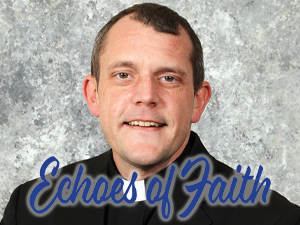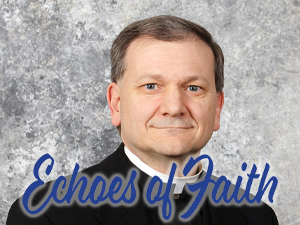
By Fr. Gary Coulter
The crowd roared as Steve advanced the football for a first down. I was in the seventh grade, there to watch my brother play freshman football and to enjoy the game, cheering with the rest of the crowd. On this play, Steve was slow in getting up and obviously in pain. They pulled him from the game, and when he went to the doctor, no one expected that Steve would be diagnosed, not with a football injury, but with cancer.
Steve Goodwater (1972-1987) was two grades ahead but only one year older than me, a good friend of my older brother and my friend, too. Our families were close, and I spent many nights at their home for meals and sleepovers. Steve was popular, a great athlete, and one of the best guys I knew. It was hard to believe that anything like this could happen to him. At the time, I tried not to think about it, hoping that if I ignored the problem, it would go away. It didn’t.
Within a few months, Steve’s cancer had worsened and was declared terminal. It was difficult to hear that he had so little time left to live, yet he always remained upbeat and positive. He suffered greatly from the almost continual cancer treatments and their side effects. Yet not even losing his hair could dampen his spirits. He would joke about his baldness, saying things like, “You can call me Kojak.” I’m sure he underwent great pain during this time, but he would not let that overcome his cheerful demeanor and positive outlook.
After several more months of treatment, Steve died. I have always remembered the date of his funeral — April Fool’s Day. How ironic it was for me, such a somber mood on what was normally a jovial day. Steve was such a happy person, he was probably laughing while the rest of us still here on earth mourned and lamented his death. It was my first encounter with the death of someone close, and I really wondered: Why did this have to happen? Why would a vibrant young person die in the prime of life?
Today, I know that when evil occurs, God in His infinite wisdom can use that evil to bring about good as part of His divine plan. I believe that, because it’s what he did with Jesus’ cross, which is the only answer to the mystery of suffering. But when I was 13 and Steve died? My prayers weren’t answered, and I’m supposed to believe in God’s goodness? Supposed to trust in His plan? Have faith that there is some good here? Hope that God knows more than we do? Live without knowing all the answers? I can’t say this is easy to believe or to do; indeed, I’d be lying if I said it was easy.
Over 40 years later, I can say that yes, God could possibly bring about some good, even from Steve’s death. Our true, eternal happiness lies only in being with God in heaven, something unattainable here on earth. First, I pray for his soul, that this is one good result of Steve’s dying young — a positive, eternal outcome to his brief life here on earth. Second, more important to each of us who still remain, is the realization that losses of money, power, and status are really nothing when compared with the possibility of losing one’s eternal happiness. Third, we got to see the good witness of Steve’s heroic demeanor and positive outlook when faced with pain and suffering.
And finally, I’m who I am today because the seeds of a vocation to the priesthood were planted in a seventh-grade boy. I admired not only Steve’s courage in the face of death but also a priest who went to visit him every single day. Before that fateful April 1st funeral, I had never seriously considered the reality of death and the prospect of eternity. Steve’s sickness and death did this for me. It forced me to examine my life, priorities, and goals. His death provided a confrontational reminder of my own mortality and how the things of this world quickly pass away.